'%3e%3crect%20x='8'%20y='8'%20width='496'%20height='496'%20rx='56'%20stroke='black'%20stroke-width='16'/%3e%3cpath%20d='M0%20256H512V464C512%20490.51%20490.51%20512%20464%20512H48C21.4903%20512%200%20490.51%200%20464V256Z'%20fill='black'/%3e%3cpath%20d='M105.091%20191V97.9091H124.773V138.955H126L159.5%2097.9091H183.091L148.545%20139.591L183.5%20191H159.955L134.455%20152.727L124.773%20164.545V191H105.091ZM213.023%2097.9091V191H193.341V97.9091H213.023ZM307.08%2097.9091V191H290.08L249.58%20132.409H248.898V191H229.216V97.9091H246.489L286.67%20156.455H287.489V97.9091H307.08ZM408.886%20144.455C408.886%20154.606%20406.962%20163.242%20403.114%20170.364C399.295%20177.485%20394.083%20182.924%20387.477%20186.682C380.902%20190.409%20373.508%20192.273%20365.295%20192.273C357.023%20192.273%20349.598%20190.394%20343.023%20186.636C336.447%20182.879%20331.25%20177.439%20327.432%20170.318C323.614%20163.197%20321.705%20154.576%20321.705%20144.455C321.705%20134.303%20323.614%20125.667%20327.432%20118.545C331.25%20111.424%20336.447%20106%20343.023%20102.273C349.598%2098.5151%20357.023%2096.6364%20365.295%2096.6364C373.508%2096.6364%20380.902%2098.5151%20387.477%20102.273C394.083%20106%20399.295%20111.424%20403.114%20118.545C406.962%20125.667%20408.886%20134.303%20408.886%20144.455ZM388.932%20144.455C388.932%20137.879%20387.947%20132.333%20385.977%20127.818C384.038%20123.303%20381.295%20119.879%20377.75%20117.545C374.205%20115.212%20370.053%20114.045%20365.295%20114.045C360.538%20114.045%20356.386%20115.212%20352.841%20117.545C349.295%20119.879%20346.538%20123.303%20344.568%20127.818C342.629%20132.333%20341.659%20137.879%20341.659%20144.455C341.659%20151.03%20342.629%20156.576%20344.568%20161.091C346.538%20165.606%20349.295%20169.03%20352.841%20171.364C356.386%20173.697%20360.538%20174.864%20365.295%20174.864C370.053%20174.864%20374.205%20173.697%20377.75%20171.364C381.295%20169.03%20384.038%20165.606%20385.977%20161.091C387.947%20156.576%20388.932%20151.03%20388.932%20144.455Z'%20fill='black'/%3e%3cpath%20d='M179.955%20337.909V431H162.955L122.455%20372.409H121.773V431H102.091V337.909H119.364L159.545%20396.455H160.364V337.909H179.955ZM281.761%20384.455C281.761%20394.606%20279.837%20403.242%20275.989%20410.364C272.17%20417.485%20266.958%20422.924%20260.352%20426.682C253.777%20430.409%20246.383%20432.273%20238.17%20432.273C229.898%20432.273%20222.473%20430.394%20215.898%20426.636C209.322%20422.879%20204.125%20417.439%20200.307%20410.318C196.489%20403.197%20194.58%20394.576%20194.58%20384.455C194.58%20374.303%20196.489%20365.667%20200.307%20358.545C204.125%20351.424%20209.322%20346%20215.898%20342.273C222.473%20338.515%20229.898%20336.636%20238.17%20336.636C246.383%20336.636%20253.777%20338.515%20260.352%20342.273C266.958%20346%20272.17%20351.424%20275.989%20358.545C279.837%20365.667%20281.761%20374.303%20281.761%20384.455ZM261.807%20384.455C261.807%20377.879%20260.822%20372.333%20258.852%20367.818C256.913%20363.303%20254.17%20359.879%20250.625%20357.545C247.08%20355.212%20242.928%20354.045%20238.17%20354.045C233.413%20354.045%20229.261%20355.212%20225.716%20357.545C222.17%20359.879%20219.413%20363.303%20217.443%20367.818C215.504%20372.333%20214.534%20377.879%20214.534%20384.455C214.534%20391.03%20215.504%20396.576%20217.443%20401.091C219.413%20405.606%20222.17%20409.03%20225.716%20411.364C229.261%20413.697%20233.413%20414.864%20238.17%20414.864C242.928%20414.864%20247.08%20413.697%20250.625%20411.364C254.17%20409.03%20256.913%20405.606%20258.852%20401.091C260.822%20396.576%20261.807%20391.03%20261.807%20384.455ZM313.795%20431L287.159%20337.909H308.659L324.068%20402.591H324.841L341.841%20337.909H360.25L377.205%20402.727H378.023L393.432%20337.909H414.932L388.295%20431H369.114L351.386%20370.136H350.659L332.977%20431H313.795Z'%20fill='white'/%3e%3c/g%3e%3cdefs%3e%3cclipPath%20id='clip0_2059_35'%3e%3crect%20width='512'%20height='512'%20rx='48'%20fill='white'/%3e%3c/clipPath%3e%3c/defs%3e%3c/svg%3e) New search
New searchSome German cinemas sell the whole evening rather than a seat: a doorman, a drink brought to your row, a room built around that. Twelve of them are premium houses and one company runs nine of those, but the form is older than the brand and survives in small towns that have been doing it since the 1920s. Here is all of it, what each one actually gives you, and what it costs.
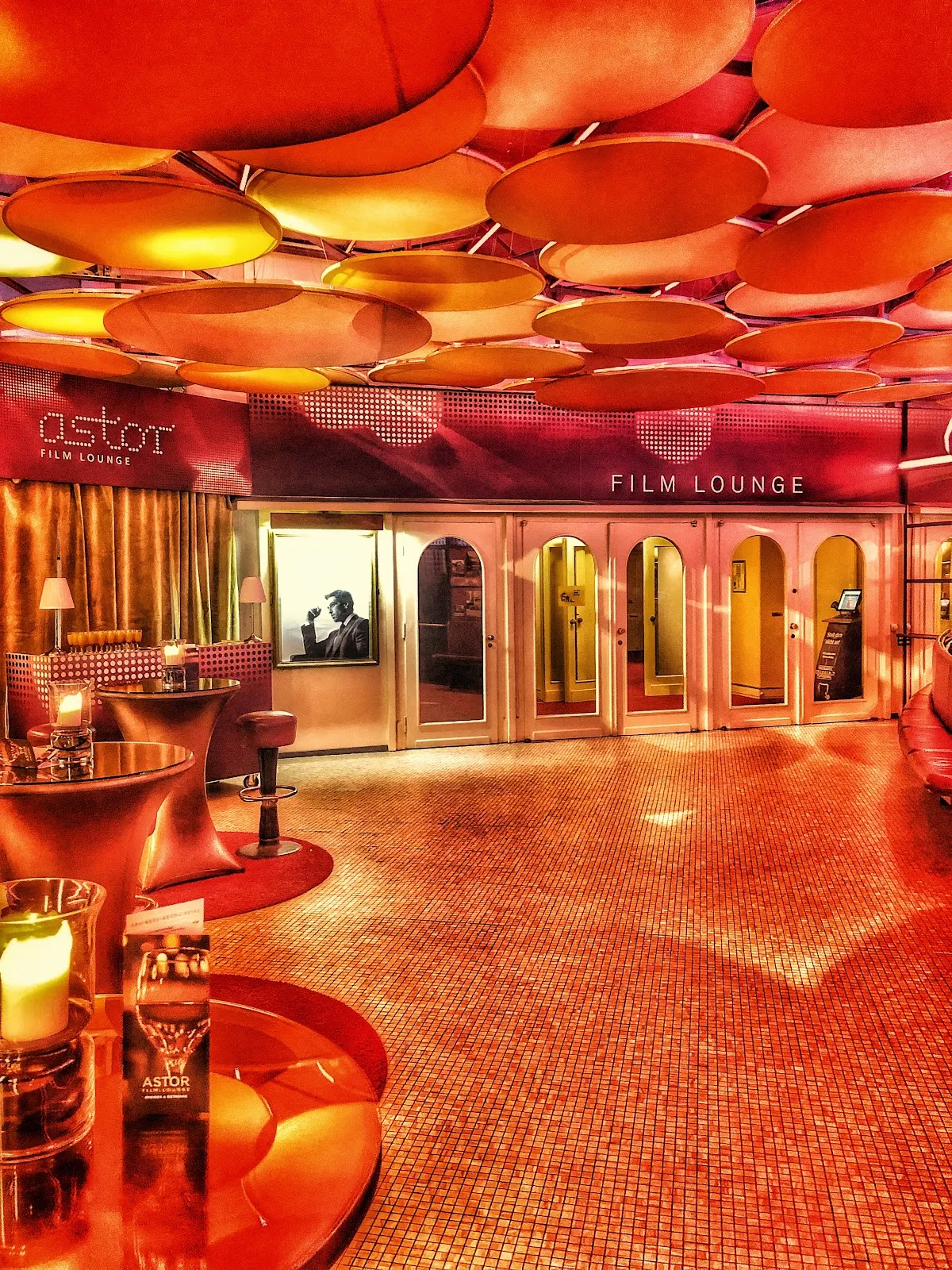
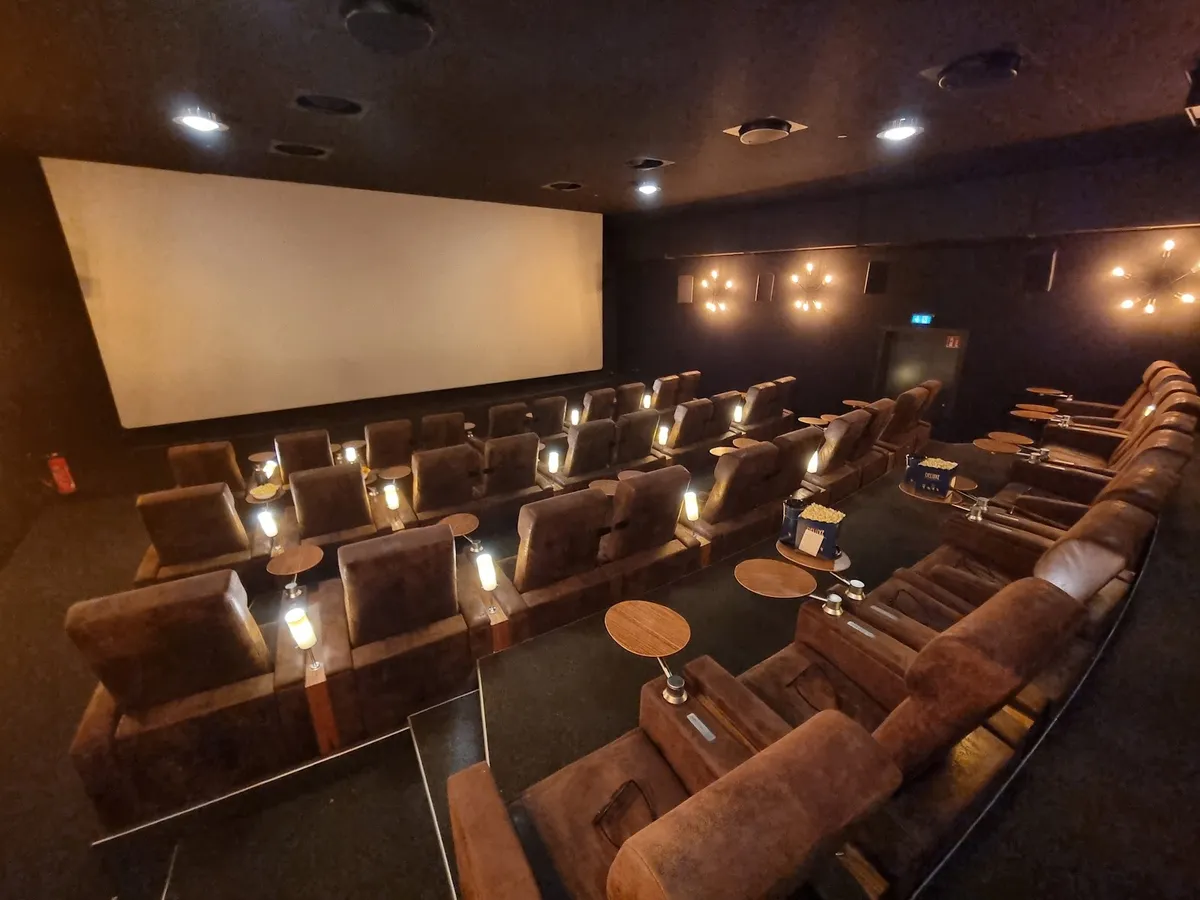
Almost every German chain now sells a wider chair with a footrest, and almost all of them use the same words to sell it. The difference is who does the walking. In a premium house someone takes your coat, someone brings the wine to your row, and the auditorium was rebuilt around that service. With a premium seat you still queue at the counter and carry your own tray; the chair is better and nothing else has changed.
Both are worth paying for. They are not the same purchase, and the marketing will not tell you which one you are making. This page separates them.
Ordered by the year each opened as a premium cinema, with the two that publish no opening year last. Nine belong to Premium Entertainment, the company Hans-Joachim Flebbe founded after leaving CinemaxX, the multiplex chain he had co-founded himself. Of the rest, one is Kinopolis's, one is a hotel's and one is Cinecittà's.
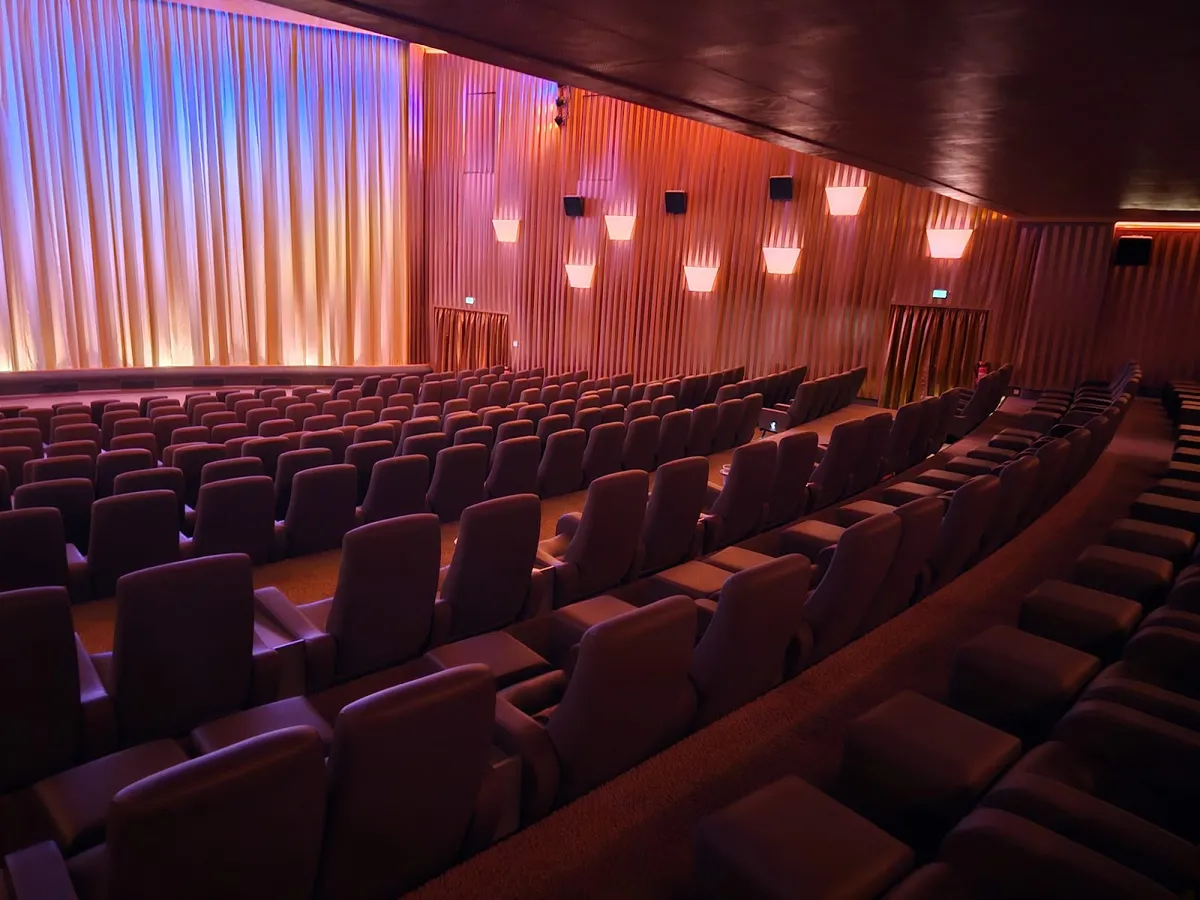
The house that invented the format. Flebbe took over a CinemaxX cinema on Kurfürstendamm at the end of 2008, pulled out most of the seating and put 231 leather armchairs back in fourteen rows. The shell-shaped auditorium is Gerhard Fritsche's, built in 1952 and listed since. One thing to know before booking: projection is still 2K onto a 13.2-metre screen, the smallest picture of any house here. You are paying for the room, the row spacing and the person who brings the wine, not for the resolution.
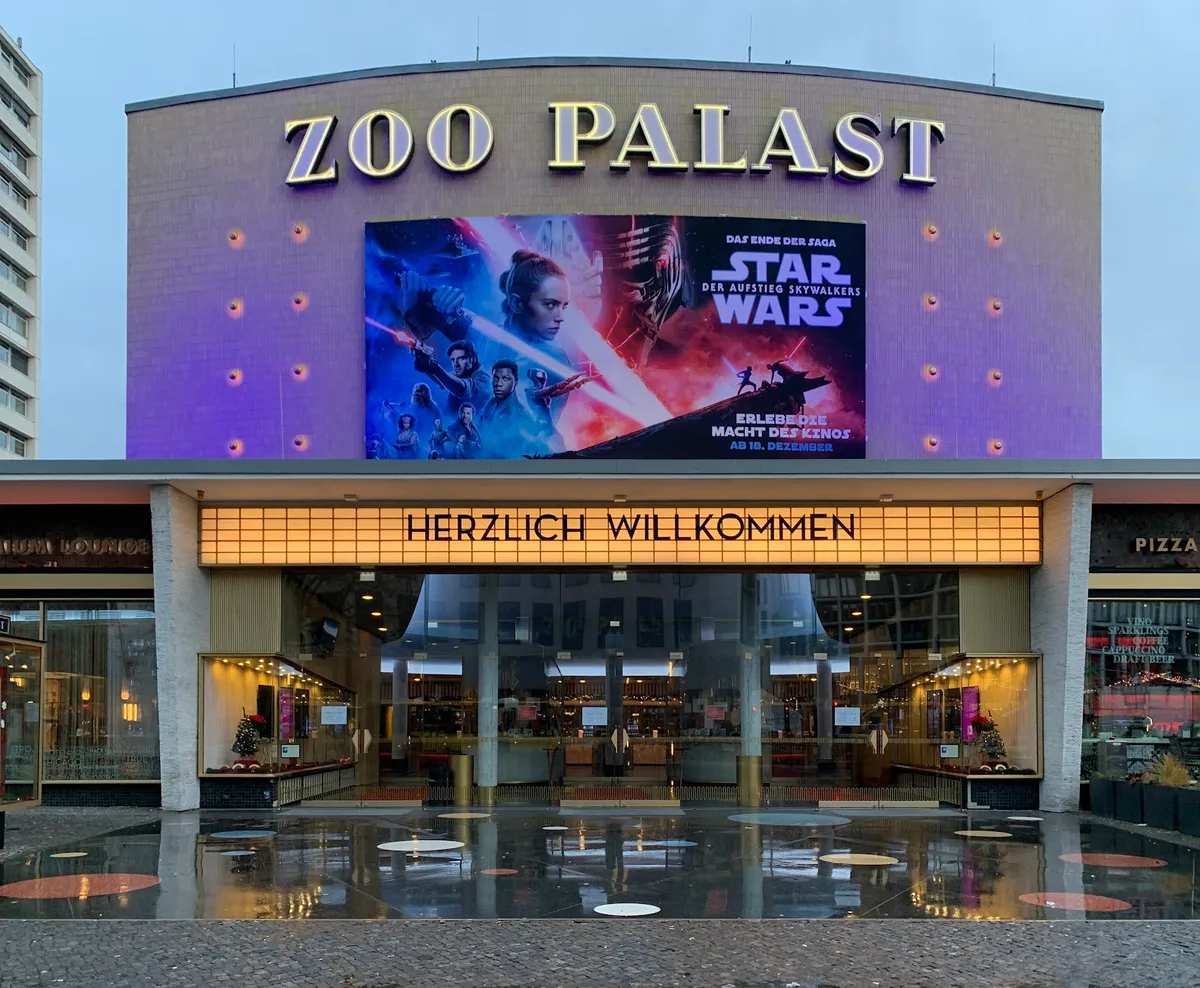
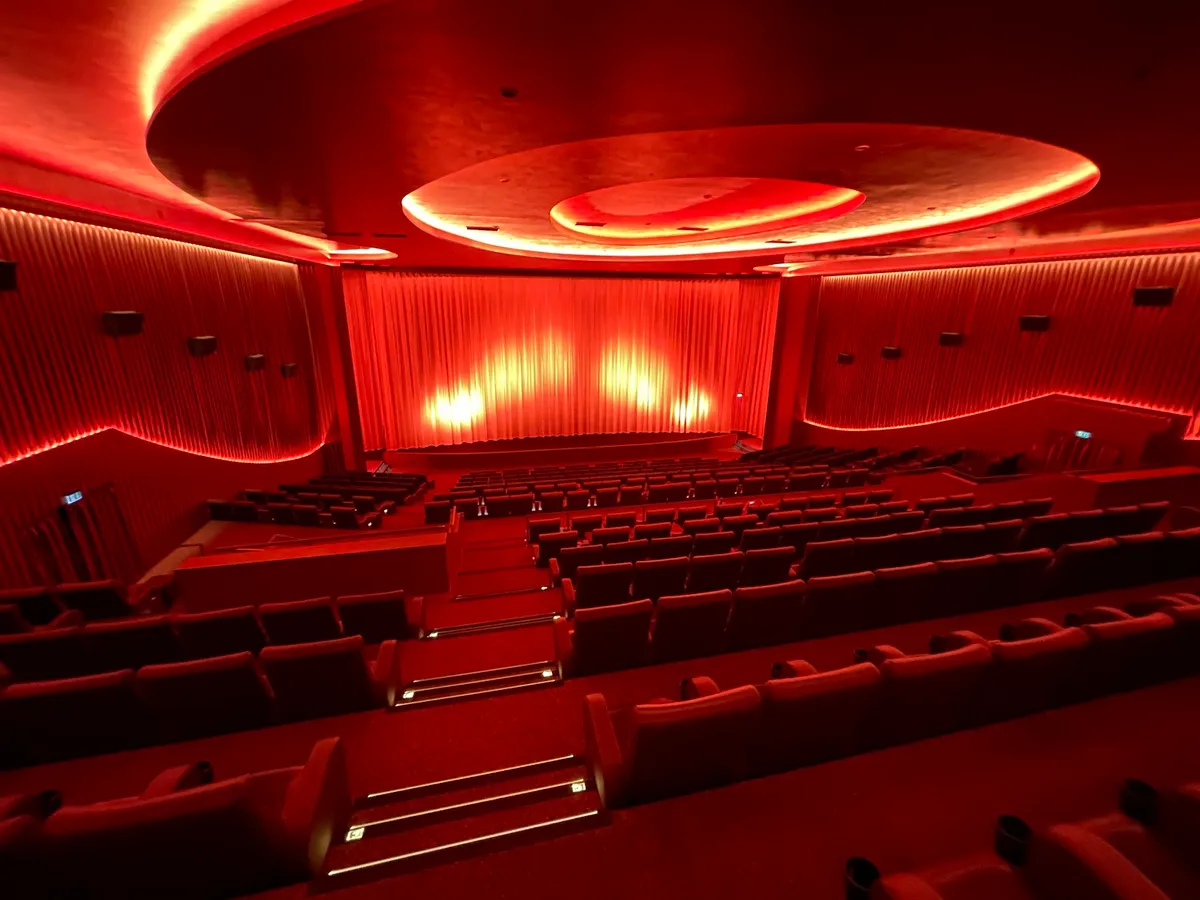
Berlin's premiere cinema from 1957, and the Berlinale's competition venue until 1999. It went dark at the end of 2011 and came back on 27 November 2013 after a restoration that took over two years. Kino 1 is the largest auditorium in regular use anywhere in Berlin: close to 800 seats, 93 loudspeakers across 44 Atmos channels, 21 by 9 metres of screen, and a 70 mm projector that still gets threaded. Two of the seven halls are club cinemas furnished as libraries, each with its own bar.
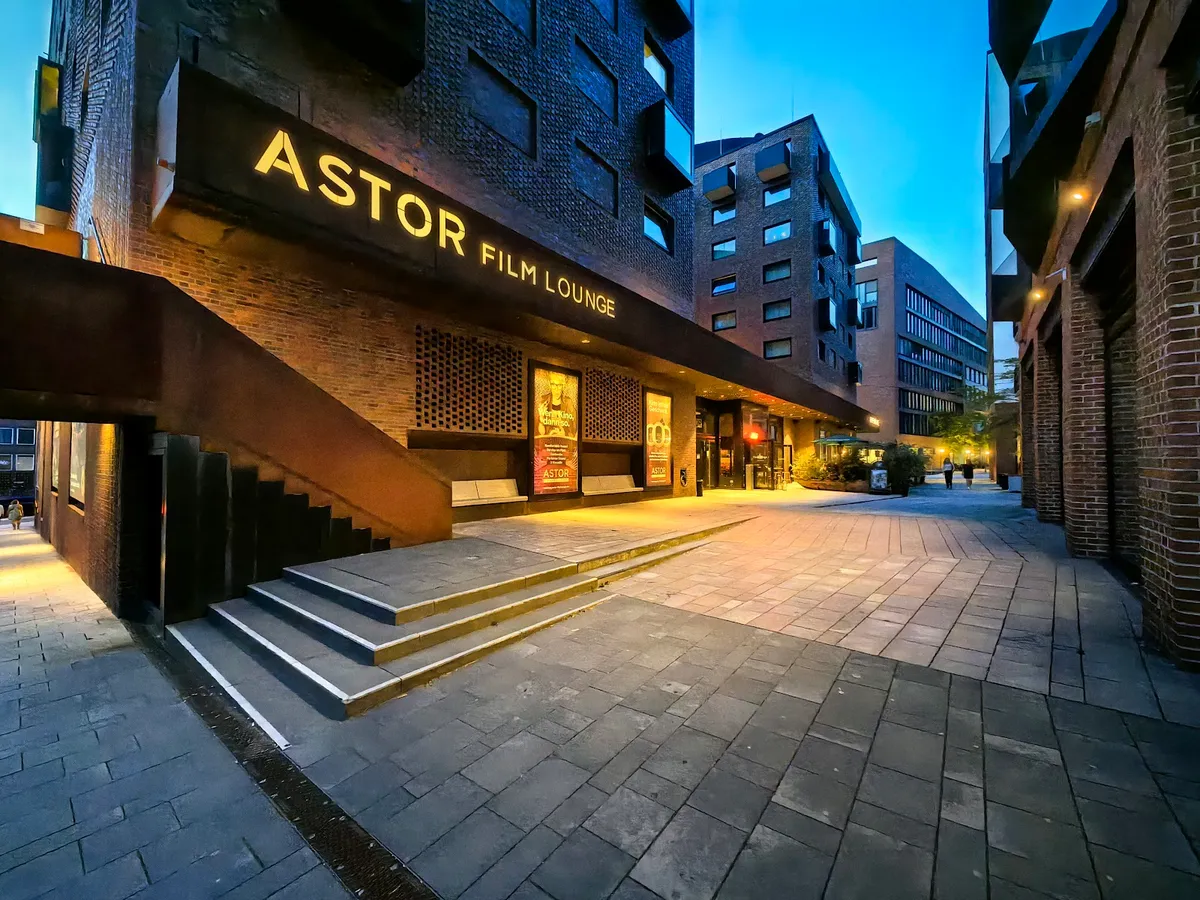
Opened in November 2018 as the first cinema in HafenCity, and one of only two Astors that are new buildings rather than rescued ones. Three halls, 419 seats, Dolby Atmos in all of them and 4K laser in the two large rooms. The figure that explains the ticket price is the row spacing: 1.06 metres in the stalls, 1.45 in the Logen. There are 240 parking spaces underneath the building.
The Savoy opened in 1957 with Todd-AO and was advertised as the most modern cinema in Europe. Flebbe reopened it in 2013 and put a 70 mm projector back in two years later; it is one of the few cinemas in Germany that can still run 70 mm, and was one of four to show The Hateful Eight that way. One hall, 16.8 by 7.1 metres, heavy stage curtains. The programme is built on English-language originals rather than on premieres, which makes it the odd one out here and the most useful address on the page if you do not speak German.
ARRI's own screening room on Türkenstraße, rebuilt and opened to the public on 6 December 2018. Three halls (333 seats, 177, and a 68-seat club) inside the building of the camera manufacturer whose equipment shot a good deal of what plays in them. The only house on this page whose history is industrial rather than theatrical, Munich's best room for seeing a film in the original, and one of four premium houses that still thread analog 70 mm: the Astor hall ran Die Odyssee on it 95 times.
Opened in 1950 as the Residenz, Theater am Ring, listed in 1992 precisely because so little had been altered, closed in 2005, and for a while a television studio. Flebbe reopened it on 19 March 2012 as Cologne's first premium cinema. Two large halls and a small club cinema, patterned fabric on the walls, heavy curtains, silver screens for 3D. Sound is Dolby Digital rather than Atmos: the least equipped house on this page, and the one that leans hardest on its interior.
Opened on 24 October 2019 on the upper floors of the MyZeil shopping centre, which sounds worse than it is. You park in the building and take the escalator up. Five halls, Dolby 7.1 with Atmos in Kino 1, two of them library-style club cinemas. The same 1.06 and 1.45 metre row spacing as HafenCity, the same welcome cocktail, the same free cloakroom.
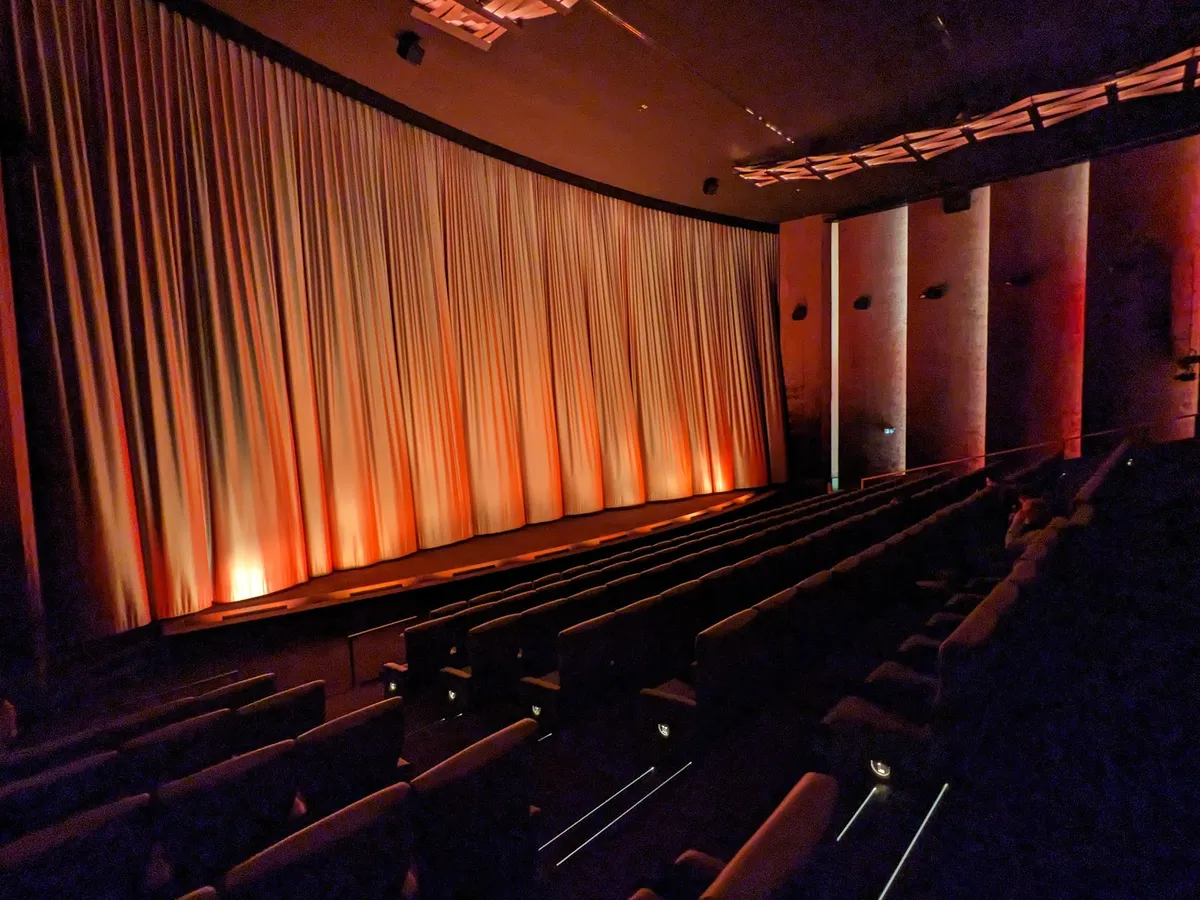
Germany's largest premium cinema, and the best story in German exhibition. Flebbe co-founded CinemaxX in 1989, and the country's first CinemaxX opened on Nikolaistraße in Hannover on 8 March 1991. He left the company in 2008, bought that same building back in 2012, and reopened it on 3 December 2014 as a premium house: ten halls, 2,200 leather seats, close to two metres of legroom. Kino 1 is one of Germany's four Dolby Cinema auditoriums, Kino 8 runs Atmos, and the house can still project 70 mm.
Reopened in October 2019, the group's least glamorous address and its most quietly useful. Eight halls, the largest screen in Lower Saxony in Kino 8 with Atmos behind it, adjustable leather seats throughout and electric footrests in the Loge. Two things differ from the flagships: seat service does not start until 16:30, and the programme has twice won Lower Saxony's Programmfilmpreis, so it is not only blockbusters.
One hall, 242 seats, on Karlsplatz, and for a decade the only house here that was not Flebbe's: Kinopolis reopened it in 2012 as Munich's first premium cinema. It makes the same four promises as the Astors: free cloakroom, welcome drink, leather seats, service at your seat. What it adds is projection none of them have, a Barco RGB laser at up to 40,000 lumens in 4K and high frame rate, against Dolby Digital 7.1 for sound. It is also the most expensive premium cinema in the country and the cheapest: €19.90 for a standard seat at the weekend with €10 more for a Loge, and €9.90 for a matinee between noon and three from Monday to Thursday.
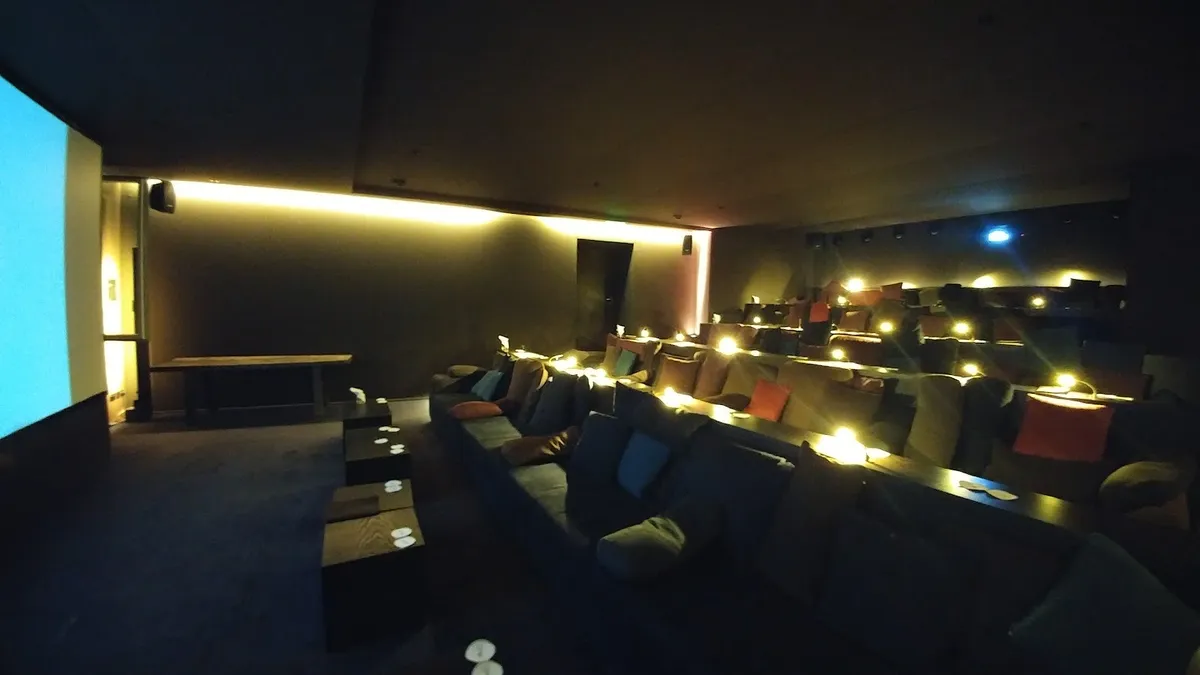
Not a cinema company's cinema at all: the Hotel Bayerischer Hof built this one into the house, and you sit on lounge sofas rather than in rows. Read the service description carefully before booking, because it is the reverse of every other house here. You order during the pre-programme and it is brought to your seat, and then service stops when the main film starts, deliberately, so nobody walks past you for the next two hours. The box office is a counter in the hotel shop, open Monday to Saturday until 19:00, and the price list has exactly two adult rates: €20 before six, €22 after.
Cinecittà's second house, opposite the Erlanger Arcaden, and the only one on this page in a town of this size. Three halls, all Deluxe: adjustable seats with footrests and just under two metres between rows. Sony 4K throughout, Dolby Atmos in halls 1 and 2, and Christie VIVE speakers in all three, the same system as the CINEMAGNUM in Nürnberg. The service is pre-ordered rather than summoned. You choose food and drink when you buy the ticket or at the counter, up until the trailers start, and it arrives at your seat during them. The free cloakroom sits next to the box office and hands out a non-alcoholic welcome drink.
Nürnberg's CINECITTA' is the largest cinema in Germany, and ten of its twenty-five auditoriums are Deluxe halls: electrically adjustable seats with footrests, over two metres between rows, and a menu brought to your seat. The other fifteen are an ordinary big-city multiplex, and both share the same foyer and the same box office.
It does not fit either list on this page, which is why it has its own. You are not buying a house and you are not buying a better chair; you are buying a hall, and you have to pick the right screening to get it. Regular admission is €12.50, the Deluxe surcharge is €6.00, and the Onyx hall costs €1.50 more again.
Showtimes10 of 25 halls
Decades before anyone put a doorman on Kurfürstendamm, small German towns had the Verzehrkino: a table at every seat and someone who brings you a drink during the film. These are not scaled-down premium houses. The service is not an upgrade you pay for, it is simply how the cinema has always worked, and it usually comes with an ordinary ticket price.
Wilhelm von der Brake laid the foundation stone in 1924, and four generations later the cinema still says nothing about the principle has changed: back then the family handed round drinks and sandwiches during the film, and the tables are still between the seats.
One air-conditioned hall on the B73 at Hamburg's southern edge, 198 seats, every one with a table and a service button. Press it and someone takes your order, at any point from the doors opening to the closing credits, which is longer than any premium house on this page will serve you.
130 French armchairs with 1.30 metres between rows, Sony 4K and 7.1 sound, and service at your seat in the evening screenings. It has won Lower Saxony's cinema programme prize several times, so the booking is not the usual small-town roster.
Kino 1 has 174 seats, recliners in the front row, sofas for two along the back, a bar inside the auditorium and service tables, with waiter service in the evening screenings. The other four halls are smaller and plainer, which is the honest shape of most of these houses.
Only cinemas whose own site describes seat service in the present tense are listed. That rules out places you will find called Service-Kinos elsewhere: Spenge's Zentral-Theater became one in 1980 and says nothing about today. There is no register of them, so treat this as four we could verify rather than the complete list.
UCI rebuilt five cinemas so that every seat in the building is an electrically adjustable leather recliner. That is a real and expensive commitment, and it is why these sit in their own list rather than above: there is no doorman and no table service. The seat is the product. Each house has one iSense hall (4K, a large screen, Dolby Atmos), and two of them have an IMAX.
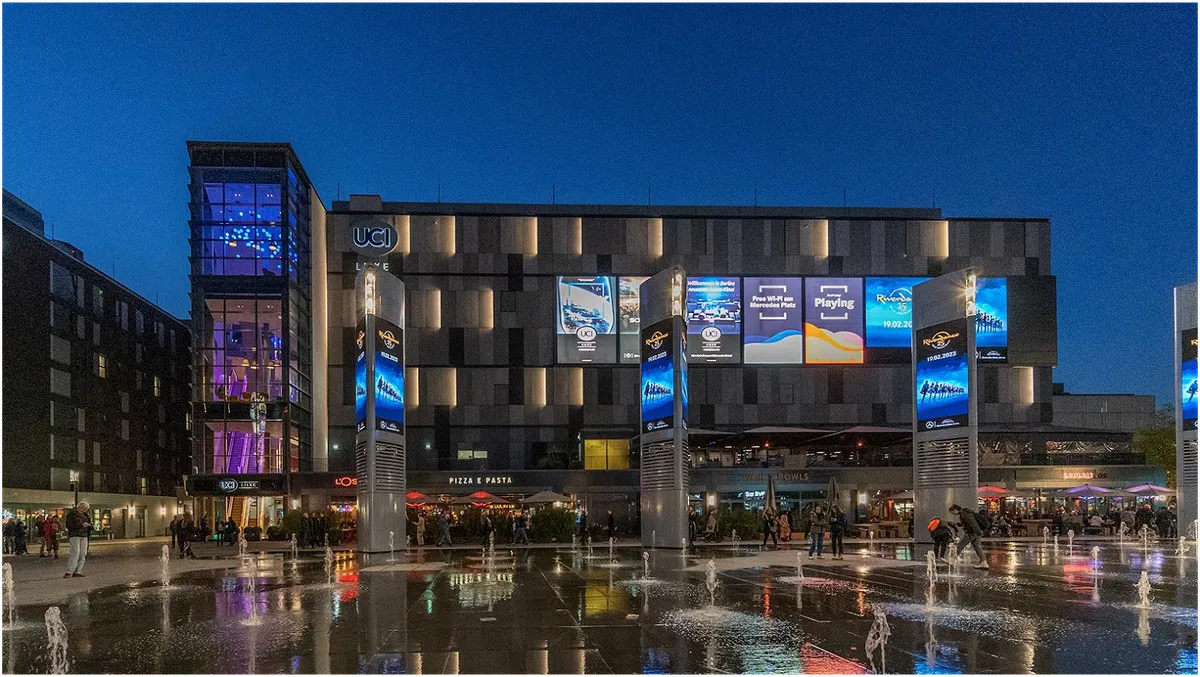
UCI's flagship, opened on 14 November 2018 as UCI Luxe Mercedes Platz. Fourteen halls, 1,380 seats: an IMAX with laser at 22.3 by 13.5 metres, an iSense hall at 16.2 by 8.8, and twelve rooms of recliners. The IMAX is the exception: it keeps IMAX's own seating.
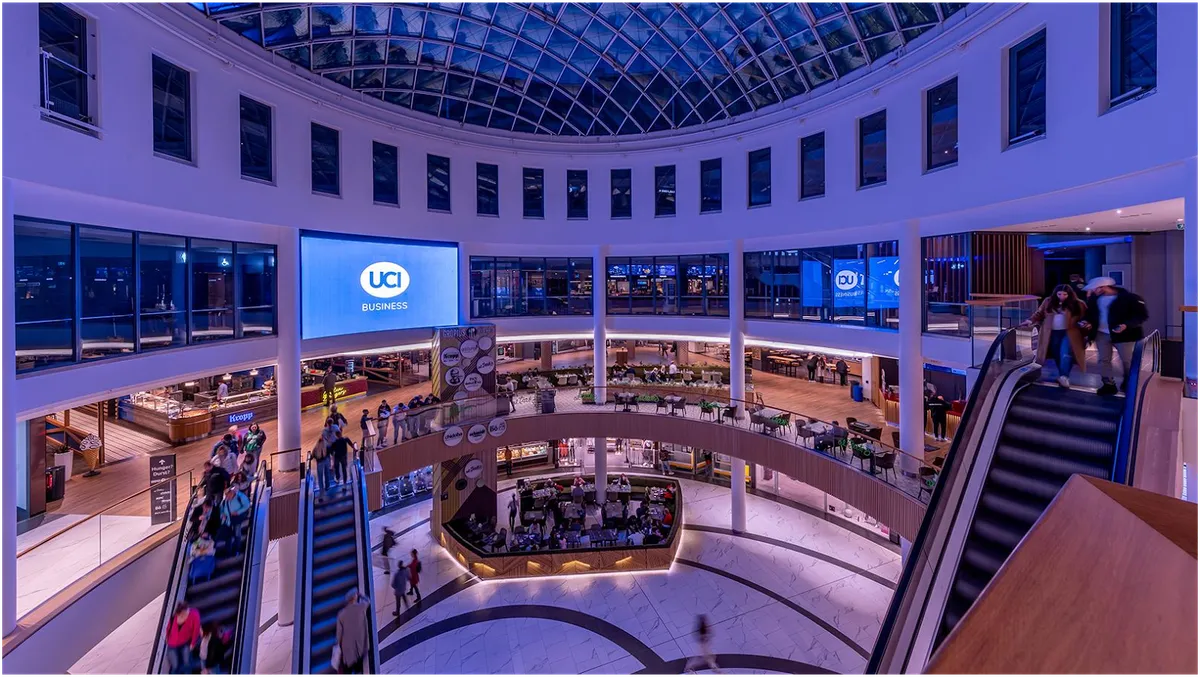
Six halls and around 850 recliners inside the Gropius Passagen, serving the south of the city. One iSense hall, no IMAX.

A 1999 multiplex in the Bahnhofspassagen, converted in 2018, with a bar looking out over the old town. The only cinema of its kind in Brandenburg.
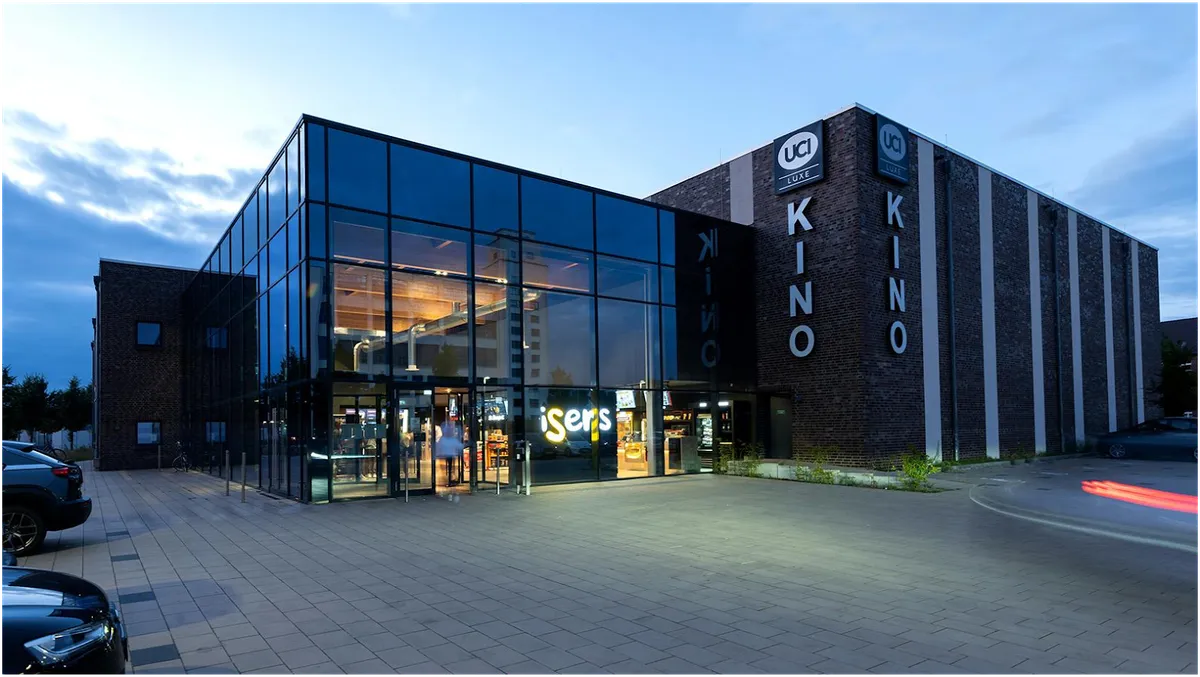
The first UCI LUXE in Germany, and it is worth noticing where UCI chose to test the format: a town near the Dutch border rather than a capital. Six halls, 506 seats, every one a recliner. It also has a room set aside for guests who need care, which nothing else on this page mentions.

The newest, converted in 2025, and the only UCI LUXE outside Berlin with an IMAX, at 21.3 by 11.65 metres with laser projection.
This is what most people in Germany can actually reach. Twelve CinemaxX towns have a premium row; only eight cities have a premium house at all. The foyer, the queue and the programme stay the multiplex's. What changes is the chair.
CinemaxX renamed its recliners LUX in January 2025 and placed ULTRA LUX above them: a wider seat and armrest, adjustable head and foot rests, a surface next to the armrest big enough for a plate, and a compartment for a coat or an umbrella. Twelve of the chain's thirty cinemas have them, the widest premium-seating footprint in the country.
A wider seat, generous legroom, an adjustable back, a footrest and in most halls a small integrated table. Thirteen of Kinopolis's eighteen houses sell them, and Aschaffenburg puts a further step above that in a KINOPOLIS LUX area. Note what the table is for: the snacks you carried in yourself, not a waiter.
Motorised recliners with wireless charging and USB in the armrest, plus two-person Premiumsofas. At the CUBIX on Alexanderplatz they are in Saal 9 and sold simply as “Premium” in the seat map.
20 beds · 1 hall · Leonberg
The strangest premium hall in Germany is in Leonberg outside Stuttgart: twenty electrically adjustable Hülsta double beds, leather at the head and foot, in the same cinema that holds the largest IMAX screen in the world. Blankets are at the counter. Nothing else in the country is attempting this.
Showtimes at the TraumpalastNo, and it is the clearest example of why this page draws the line where it does. It is Germany's most famous premiere house, a listed monument, and nobody brings you anything at your seat. You pay what you would pay at any other Yorck cinema. A grand room and a premium ticket are separate purchases, and the first has its own guide. Landmark cinemas in Germany
Eight. Munich has three, Berlin and Hamburg two each, and Cologne, Frankfurt, Hannover, Braunschweig and Erlangen one each. Counting UCI's LUXE houses adds Potsdam, Nordhorn and Bad Oeynhausen. Nuremberg is the odd one: no premium house, but ten Deluxe halls inside its multiplex. Stuttgart, Düsseldorf, Leipzig, Dresden and Bremen have nothing in any of these categories.
A premium cinema sells the whole visit: someone takes your coat, someone brings a drink to your row, and the auditorium was rebuilt around that. A premium seat is a better chair inside an ordinary multiplex, where you still queue at the counter and carry your own tray. Both are worth paying for, but the words used to advertise them are nearly identical, so the seat map is the only reliable guide.
Not at that scale. Premium Entertainment, Hans-Joachim Flebbe's company, runs nine of the twelve houses on this page, effectively the entire German chain-scale premium segment, against roughly forty Everyman sites and seventeen Curzons in Britain. The other three are one-offs: Kinopolis's Gloria Palast, a hotel's screening room in Munich and Cinecittà's house in Erlangen.
The Savoy in Hamburg is the clearest case: its programme is built on English-language originals without subtitles. Everywhere else it varies week to week, so the version is listed on every screening we carry.
The Traumpalast in Leonberg near Stuttgart, which has twenty electrically adjustable double beds in one hall. It is the only cinema in Germany with a room like it.
Four: the Zoo Palast in Berlin, the Savoy in Hamburg, the Astor Grand Cinema in Hannover and the Astor Film Lounge im ARRI in Munich. Each runs it out of one hall: Kino 7 in Hannover, the Astor in Munich. The Savoy reinstalled its projector in 2015.
Every figure checked against the operator's own pages on 3 August 2026.
Ticket ranges are adult rates and include seat-category surcharges such as the Loge. Surcharges for running time, 3D, weekends and premium formats are not included.