'%3e%3crect%20x='8'%20y='8'%20width='496'%20height='496'%20rx='56'%20stroke='black'%20stroke-width='16'/%3e%3cpath%20d='M0%20256H512V464C512%20490.51%20490.51%20512%20464%20512H48C21.4903%20512%200%20490.51%200%20464V256Z'%20fill='black'/%3e%3cpath%20d='M105.091%20191V97.9091H124.773V138.955H126L159.5%2097.9091H183.091L148.545%20139.591L183.5%20191H159.955L134.455%20152.727L124.773%20164.545V191H105.091ZM213.023%2097.9091V191H193.341V97.9091H213.023ZM307.08%2097.9091V191H290.08L249.58%20132.409H248.898V191H229.216V97.9091H246.489L286.67%20156.455H287.489V97.9091H307.08ZM408.886%20144.455C408.886%20154.606%20406.962%20163.242%20403.114%20170.364C399.295%20177.485%20394.083%20182.924%20387.477%20186.682C380.902%20190.409%20373.508%20192.273%20365.295%20192.273C357.023%20192.273%20349.598%20190.394%20343.023%20186.636C336.447%20182.879%20331.25%20177.439%20327.432%20170.318C323.614%20163.197%20321.705%20154.576%20321.705%20144.455C321.705%20134.303%20323.614%20125.667%20327.432%20118.545C331.25%20111.424%20336.447%20106%20343.023%20102.273C349.598%2098.5151%20357.023%2096.6364%20365.295%2096.6364C373.508%2096.6364%20380.902%2098.5151%20387.477%20102.273C394.083%20106%20399.295%20111.424%20403.114%20118.545C406.962%20125.667%20408.886%20134.303%20408.886%20144.455ZM388.932%20144.455C388.932%20137.879%20387.947%20132.333%20385.977%20127.818C384.038%20123.303%20381.295%20119.879%20377.75%20117.545C374.205%20115.212%20370.053%20114.045%20365.295%20114.045C360.538%20114.045%20356.386%20115.212%20352.841%20117.545C349.295%20119.879%20346.538%20123.303%20344.568%20127.818C342.629%20132.333%20341.659%20137.879%20341.659%20144.455C341.659%20151.03%20342.629%20156.576%20344.568%20161.091C346.538%20165.606%20349.295%20169.03%20352.841%20171.364C356.386%20173.697%20360.538%20174.864%20365.295%20174.864C370.053%20174.864%20374.205%20173.697%20377.75%20171.364C381.295%20169.03%20384.038%20165.606%20385.977%20161.091C387.947%20156.576%20388.932%20151.03%20388.932%20144.455Z'%20fill='black'/%3e%3cpath%20d='M179.955%20337.909V431H162.955L122.455%20372.409H121.773V431H102.091V337.909H119.364L159.545%20396.455H160.364V337.909H179.955ZM281.761%20384.455C281.761%20394.606%20279.837%20403.242%20275.989%20410.364C272.17%20417.485%20266.958%20422.924%20260.352%20426.682C253.777%20430.409%20246.383%20432.273%20238.17%20432.273C229.898%20432.273%20222.473%20430.394%20215.898%20426.636C209.322%20422.879%20204.125%20417.439%20200.307%20410.318C196.489%20403.197%20194.58%20394.576%20194.58%20384.455C194.58%20374.303%20196.489%20365.667%20200.307%20358.545C204.125%20351.424%20209.322%20346%20215.898%20342.273C222.473%20338.515%20229.898%20336.636%20238.17%20336.636C246.383%20336.636%20253.777%20338.515%20260.352%20342.273C266.958%20346%20272.17%20351.424%20275.989%20358.545C279.837%20365.667%20281.761%20374.303%20281.761%20384.455ZM261.807%20384.455C261.807%20377.879%20260.822%20372.333%20258.852%20367.818C256.913%20363.303%20254.17%20359.879%20250.625%20357.545C247.08%20355.212%20242.928%20354.045%20238.17%20354.045C233.413%20354.045%20229.261%20355.212%20225.716%20357.545C222.17%20359.879%20219.413%20363.303%20217.443%20367.818C215.504%20372.333%20214.534%20377.879%20214.534%20384.455C214.534%20391.03%20215.504%20396.576%20217.443%20401.091C219.413%20405.606%20222.17%20409.03%20225.716%20411.364C229.261%20413.697%20233.413%20414.864%20238.17%20414.864C242.928%20414.864%20247.08%20413.697%20250.625%20411.364C254.17%20409.03%20256.913%20405.606%20258.852%20401.091C260.822%20396.576%20261.807%20391.03%20261.807%20384.455ZM313.795%20431L287.159%20337.909H308.659L324.068%20402.591H324.841L341.841%20337.909H360.25L377.205%20402.727H378.023L393.432%20337.909H414.932L388.295%20431H369.114L351.386%20370.136H350.659L332.977%20431H313.795Z'%20fill='white'/%3e%3c/g%3e%3cdefs%3e%3cclipPath%20id='clip0_2059_35'%3e%3crect%20width='512'%20height='512'%20rx='48'%20fill='white'/%3e%3c/clipPath%3e%3c/defs%3e%3c/svg%3e)
Landmark cinemas in Germany
Eighteen cinemas that were remarkable long before anyone thought of charging extra for a cinema. A 1929 Poelzig hall with its organ still in place, a dance palace rebuilt as a picture house in 1949, the GDR's premiere cinema on Karl-Marx-Allee. Almost all of them sell an ordinary ticket, which is the most interesting thing about them.
Old is not the same as still there
Plenty of German cinemas advertise a founding date. Far fewer still run films in the room that date refers to, and a listed façade with a modern box behind it is a different thing from a hall you can sit in. Every cinema here passes three checks: we carry its programme, the historic room is the room the film plays in, and the operator's own pages carry the history.
That third check is what the list is, and it moves. The Lichtburg in Essen, the largest cinema hall in the country, was absent from the first version of this page only because its site would not answer; the reason turned out to be a redirect to its operator's other domain, and it is here now. Cinemas still missing are missing for that kind of reason rather than because they do not qualify.
The eighteen
Ordered by the year each room first showed a film, which is not always the year of the building. The Delphi is a 1928 dance palace and a 1949 cinema, and both dates matter.
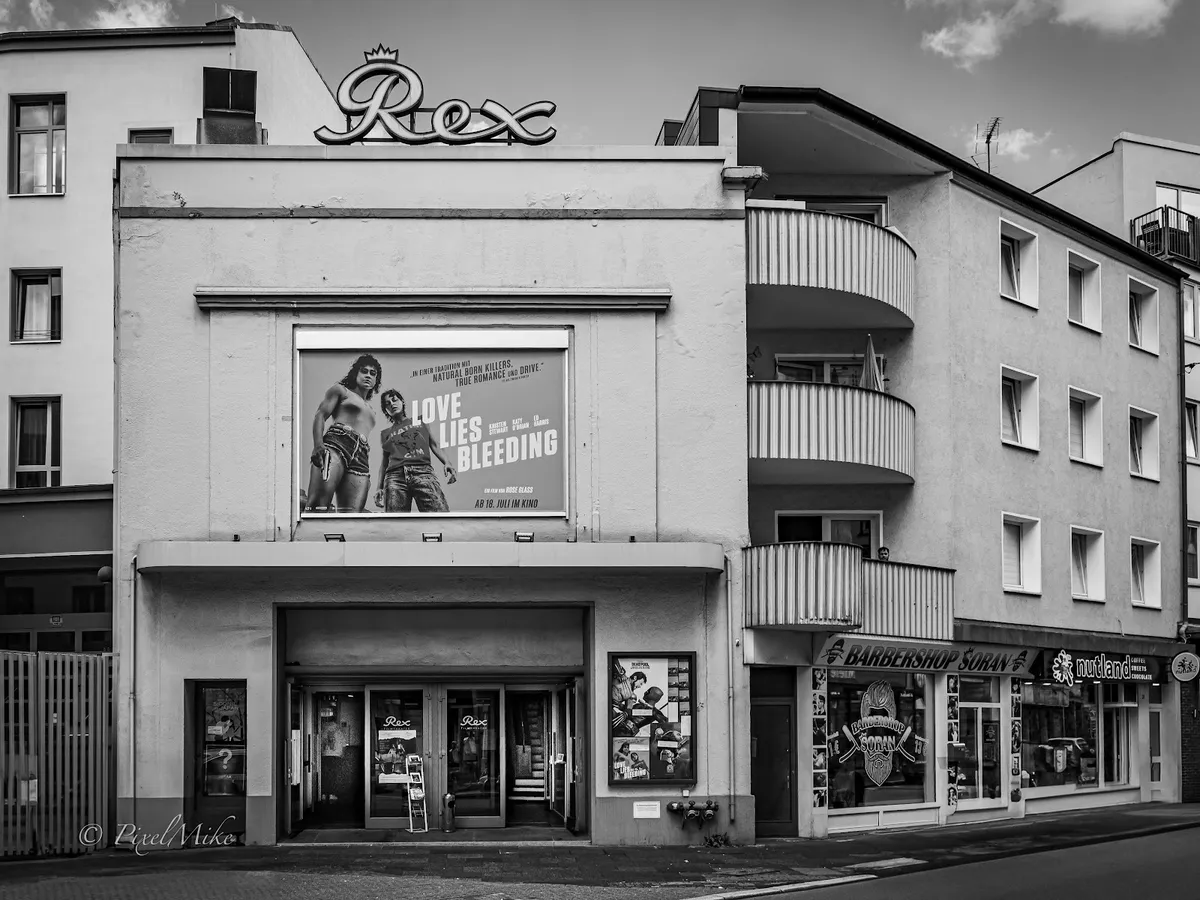
- Wuppertal Rex Filmtheater
The house dates its first film to 1889, and says outright what that would mean and why it does not: it would make the Rex the oldest cinema in the world, except that in 1889 it was a hotel called the Salamander. It has been a cinema through many rebuilds and one complete destruction. The operator still brings ice cream to your seat, and there are private boxes at the back.
- Leipzig UT Connewitz
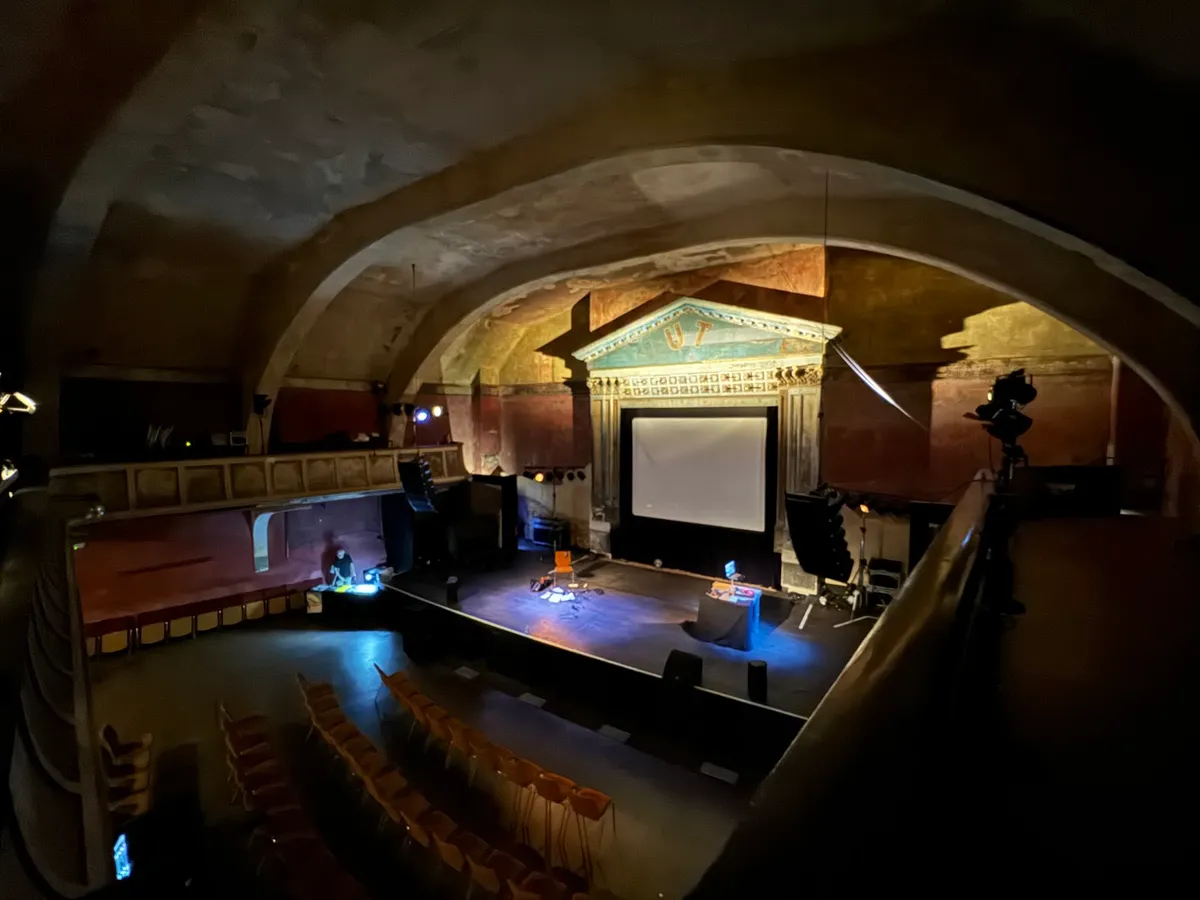
The first film ran on Christmas Day 1912: Die schwarze Katze, directed by Viggo Larsen. The reinforced concrete frame had gone up that same year, built by William Pittschaft, Emil Seyfarth and Arthur Werner, and Hermann Haase was the first to run films in it. It has been called the U.T. Connewitz since October 1920. The street has changed name since; the hall has not changed use.
- Leipzig Passage Kinos
Opened on 26 November 1915 by Reinhold Meißner as the U.T Hainstraße, with 580 seats, and it has been showing films in the same arcade off Hainstraße ever since. The name Passage came much later. Its own history page is a year-by-year list, which is a good sign in a cinema.
- Essen Filmstudio Glückauf
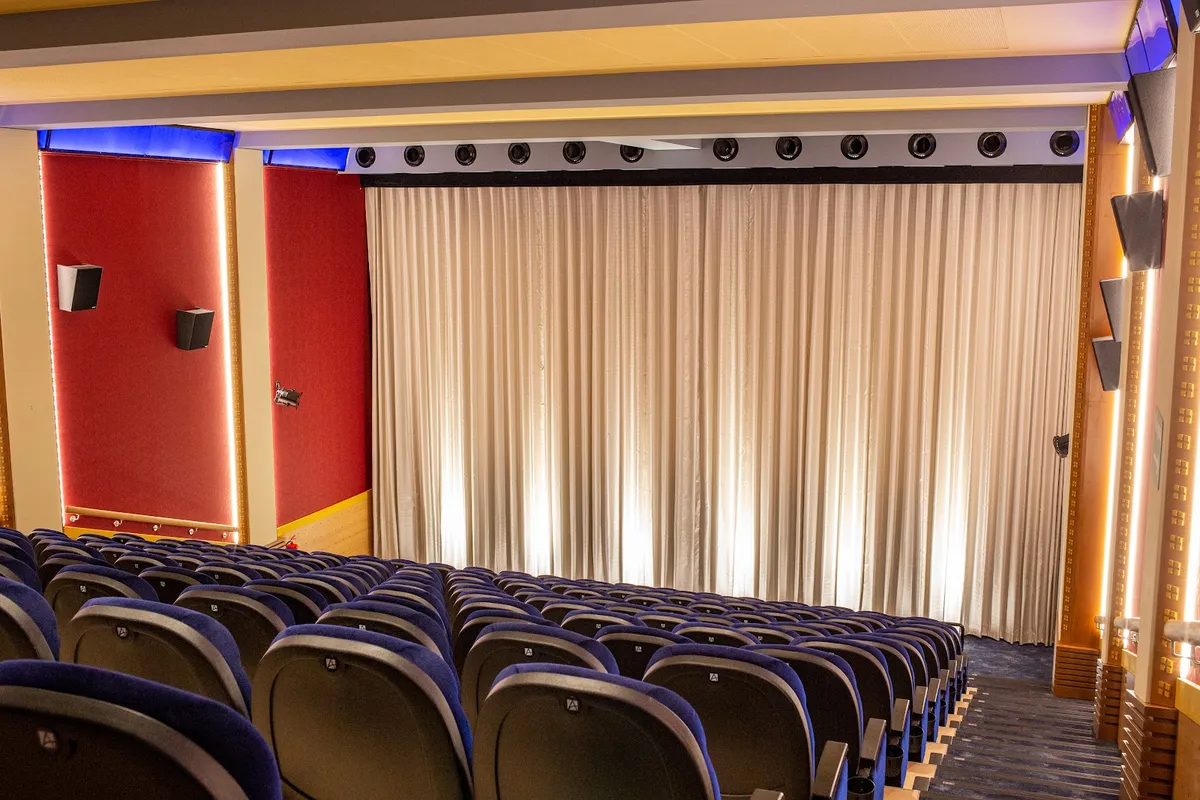
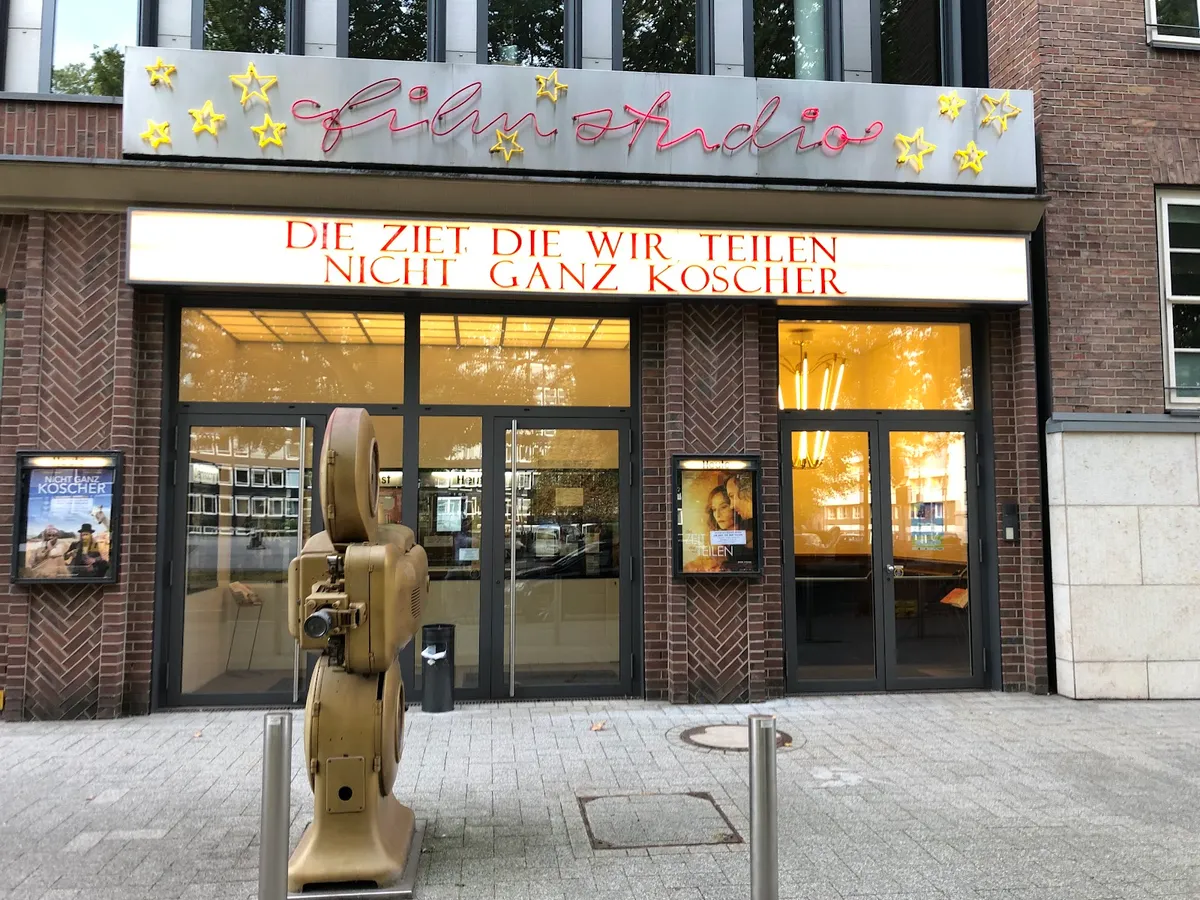
Essen's oldest cinema, running since 1924 on the Rüttenscheider Straße, which the city calls the Rü. Its operator counts it among the oldest in North Rhine-Westphalia and calls it the diamond of the region's picture houses, which is the kind of thing operators say, except that the survival record backs it: of more than twenty screens that once stood in central Essen, this is one of six left. 250 seats, renovated in the 1950s style it wore rather than out of it.
- Stuttgart Das Metropol
A listed picture house on the site of Stuttgart's first railway station, which opened in 1846 and was retired in 1922 when the present Hauptbahnhof took over. The building became a cinema in 1926. Kino 1 still shows what that means: a dome that was uncovered again, a cloud curtain, a balcony, red velvet and gold, and in front of all of it the largest screen in the city centre at 106 square metres. Kino 3 went the other way and has Stuttgart's first Cinema LED screen.
- Berlin Cineplex Titania
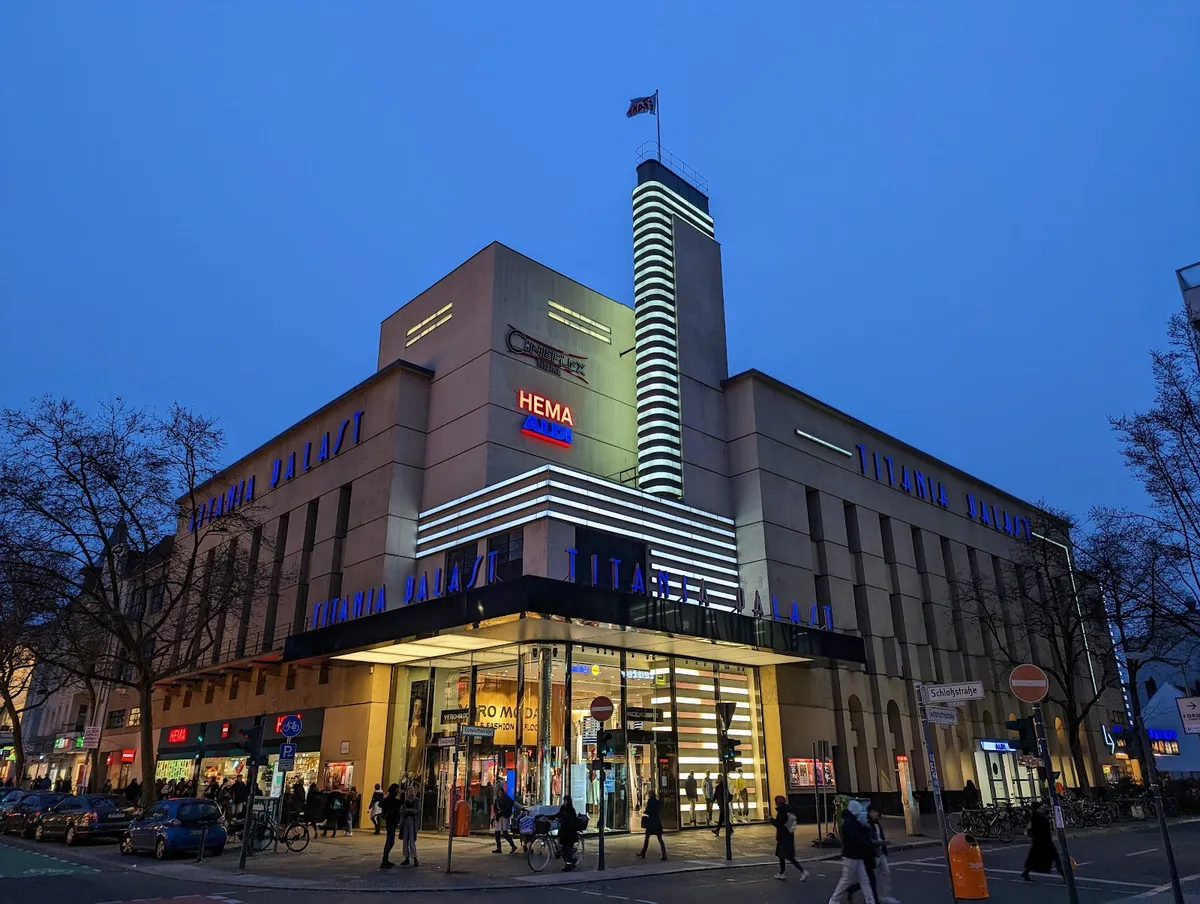
The house was built in 1926/27 in Steglitz, and what happened in it afterwards is the reason it is here. The Berlin Philharmoniker played their first concert after the Second World War on this stage. The first Berlinale was held here. Marlene Dietrich gave her last Berlin concert here, and Maria Callas sang here. It is now seven halls and about 1,200 seats, a working multiplex rather than a museum, which is the trade every house on this page has made.
- Leipzig Schauburg
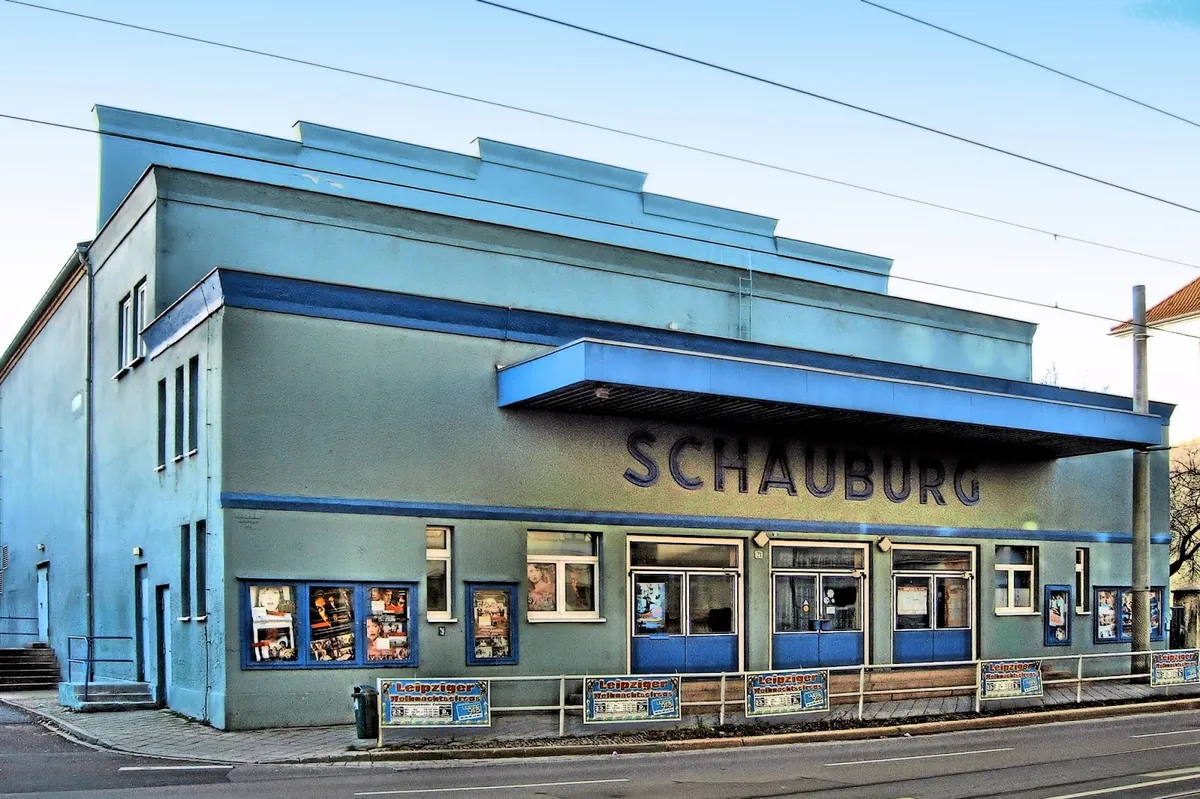
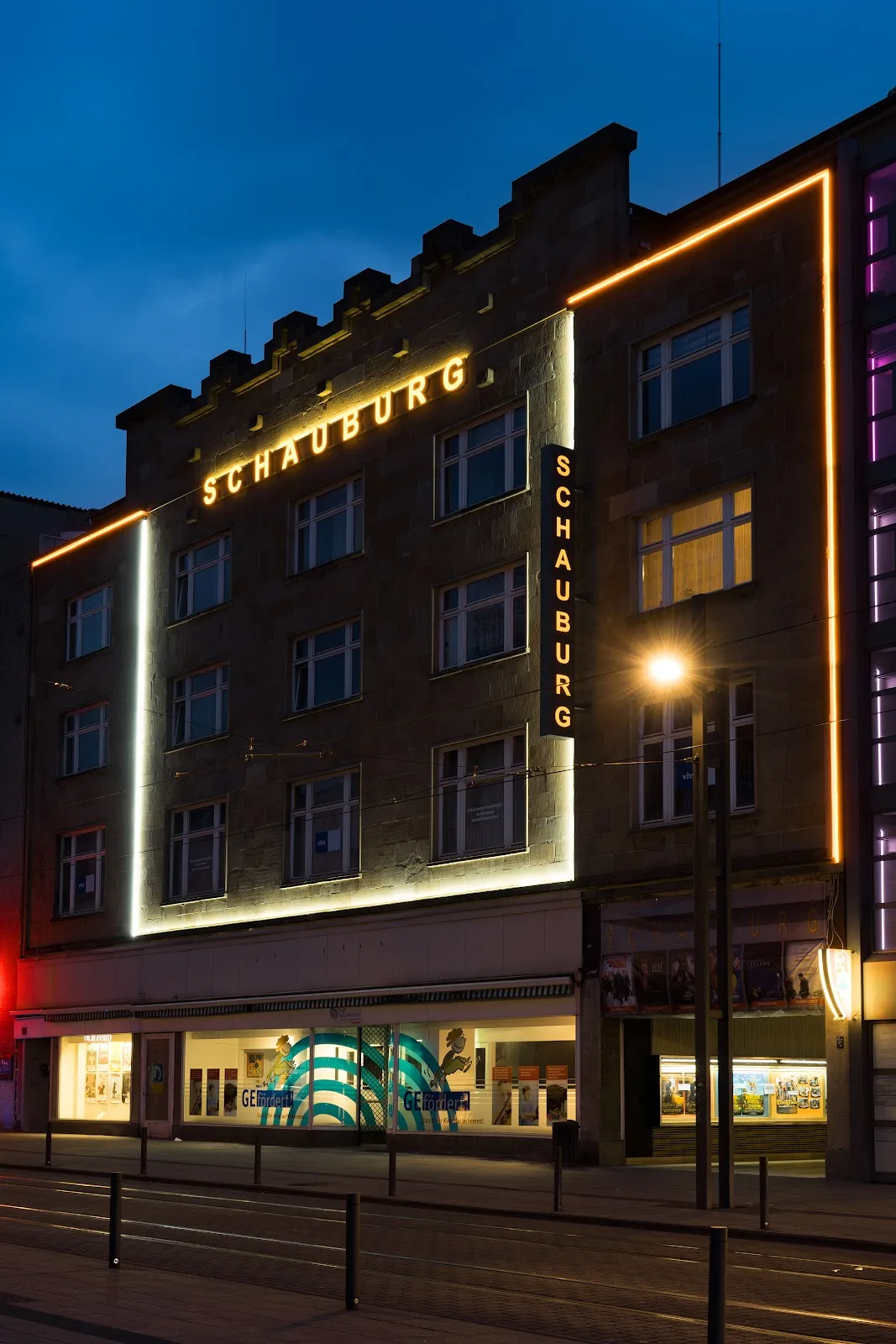
Built in 1928 at the Adler crossroads to plans by Hermann Mäding, for a film distributor, in Art Déco. The building is listed. Several conversions later it holds three halls and 435 seats between them, which is a good deal fewer than the single room started with, and the early picture-house detailing survived all of it.
- Essen Lichtburg
Germany's largest cinema hall, and its operator does not hedge about it: 1,250 seats in one room, opened in 1928, a relic of the era of the great picture palaces. Its survival was not certain. A public campaign fought for years to keep it a cinema, after which it was closed for a year, restored, re-equipped for film and stage, and reopened in March 2003. It is currently the only place in North Rhine-Westphalia showing Die Odyssee in 70 mm.
- Berlin Babylon
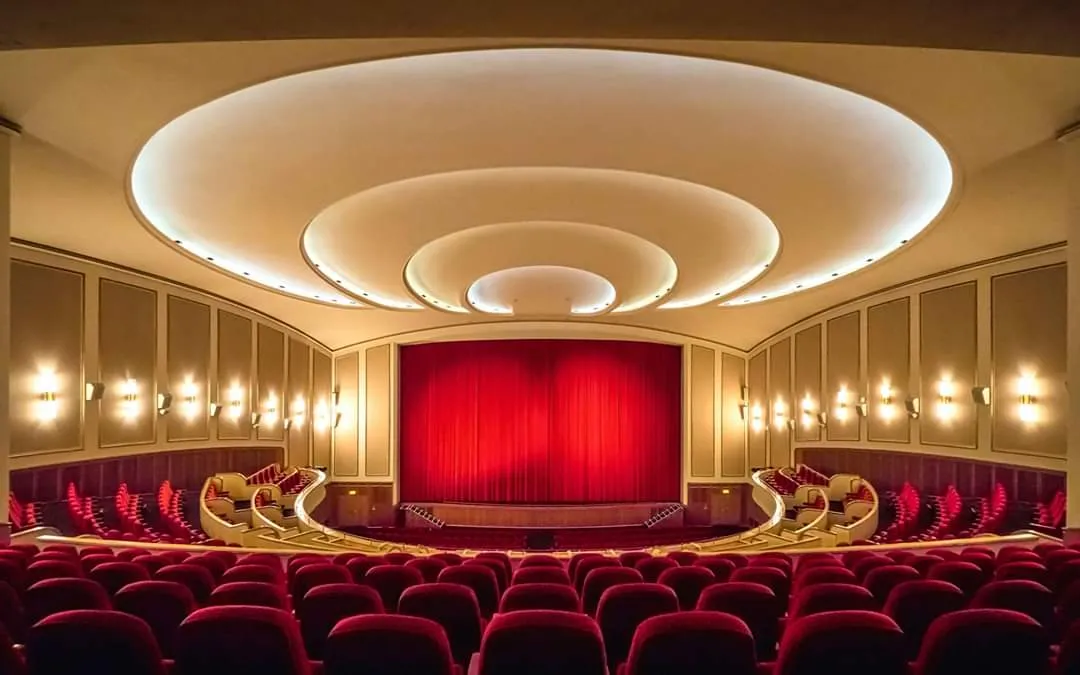
Hans Poelzig's third cinema, opened in April 1929 on what is now Rosa-Luxemburg-Platz. It has the only cinema organ in Germany still standing where it was installed: a Philipps cinema orchestra organ from Frankfurt am Main, the largest of its kind in the country when it was new, restored in 2019. The console has two manuals, a pedal and a hundred registers, and it is played at silent film screenings rather than kept behind glass. The main hall seats 500.

- Gelsenkirchen Schauburg Filmpalast
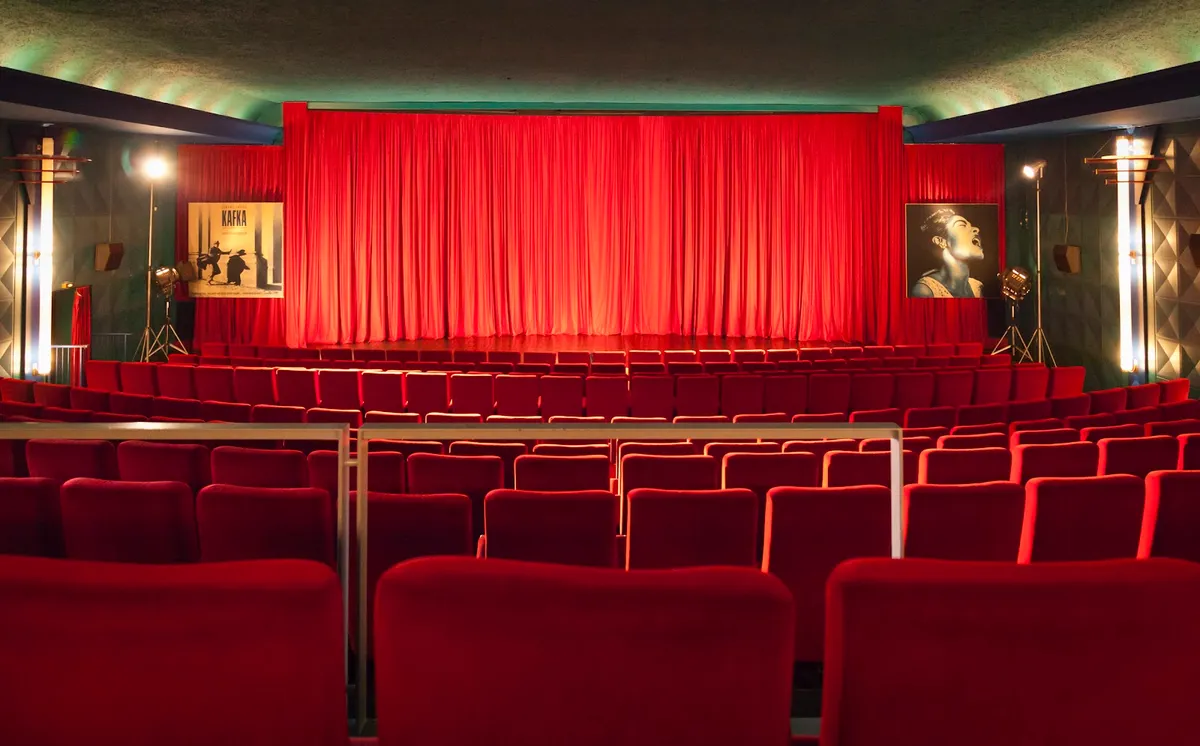
One of the last classic cinema palaces in Germany, by its own description, and the 1929 building still reads as theatre architecture: curved corridors with a great many doors, a sweeping staircase, a bright foyer in the middle. It began as a single room of 1,400 seats and is now three halls. The house is partly listed, and it shares its programme with Gelsenkirchen's kommunales Kino.
- Bremen Schauburg
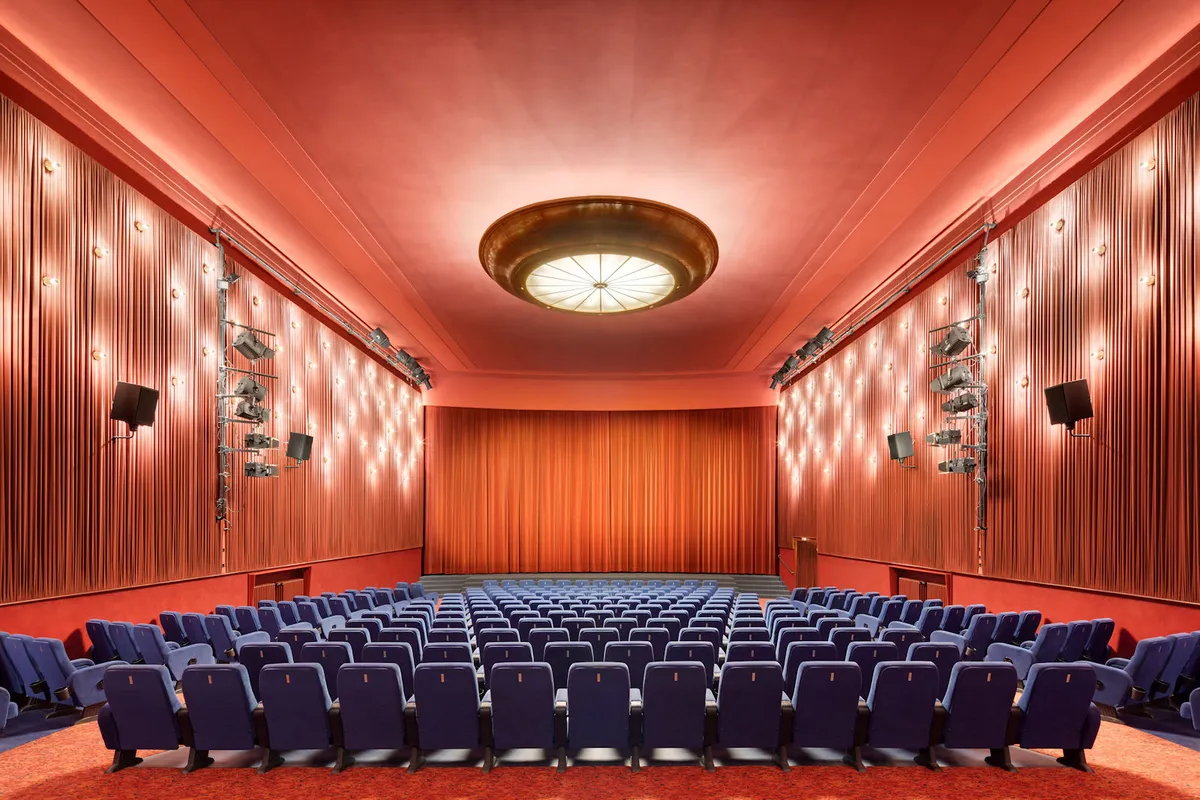
Opened in September 1929 to a design by the Bremen architect Joseph Ostwald, for the merchant Johannes Hagen, with 800 seats, and it was the city's first sound-film theatre. The silent-film houses disappeared from Bremen soon after. It nearly went under in the cinema crisis of the early 1980s, until a society took it on in 1982, divided the halls and turned it into a repertory house. Two halls and 349 seats today, the larger with a screen of almost 90 square metres.
- Berlin Delphi Filmpalast
Bernhard Sehring, who built the Theater des Westens next door, designed this as a dance hall in the late 1920s. It opened in 1928 and its nights were wild enough to earn it an entry in the 1931 Führer durch das lasterhafte Berlin. The war left almost nothing. Walter Jonigkeit rebuilt it in 1949 as a 1,200-seat cinema, and in 1980 a proposal to cut it into a multiplex was stopped by a one-day strike of Berlin's independent cinemas. It is now the largest arthouse auditorium in the country, more than 670 seats, with 4K laser.
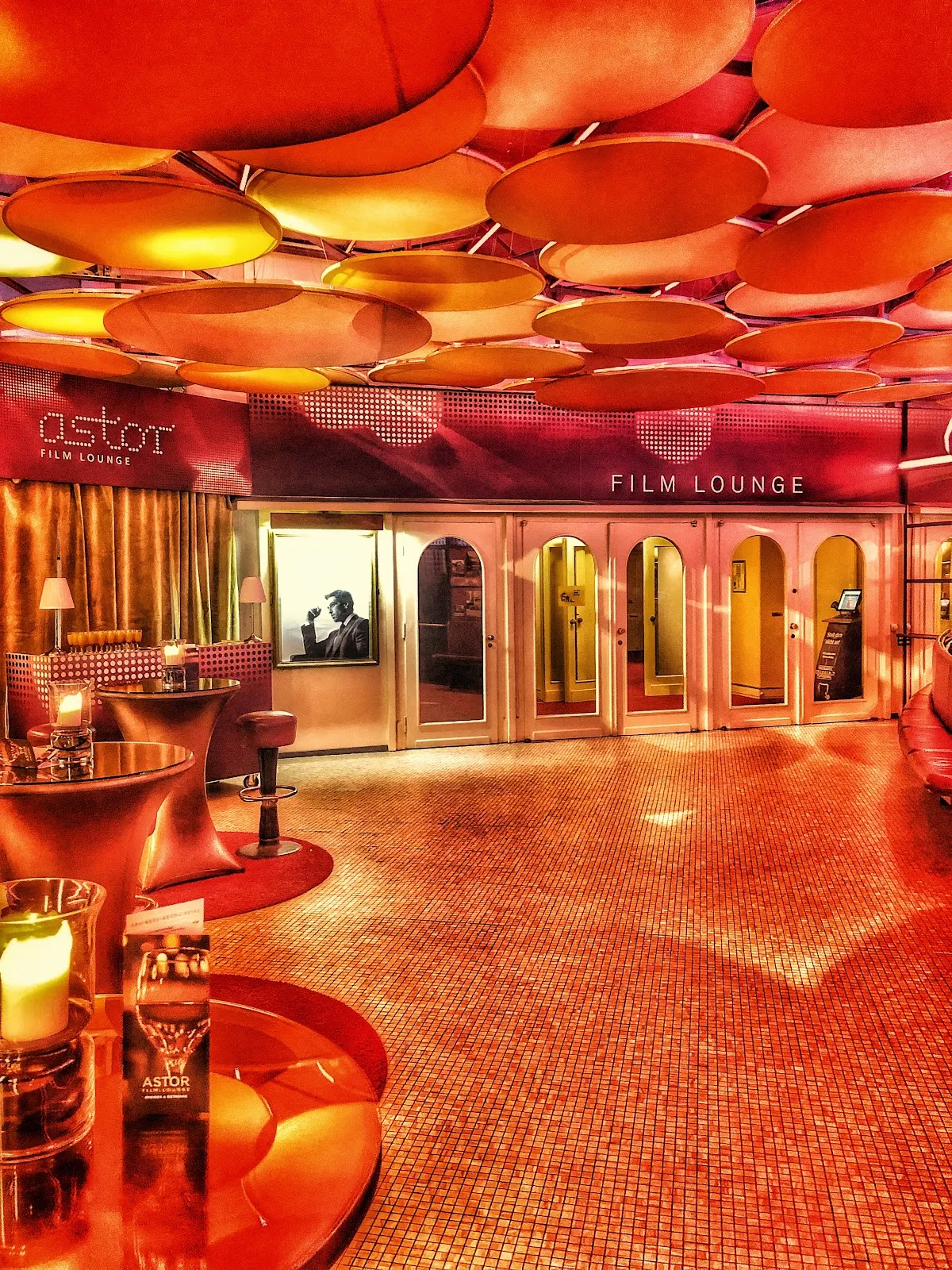
- Berlin ASTOR Film Lounge
Gerhard Fritsche's shell-shaped auditorium of 1952, listed ever since, on the Kurfürstendamm. Flebbe took out most of the seating in 2008 and put back 231 leather armchairs in fourteen rows, which is the version you sit in today. Worth knowing before booking: projection is 2K onto a 13.2-metre screen, so the room is the reason to come, not the picture.
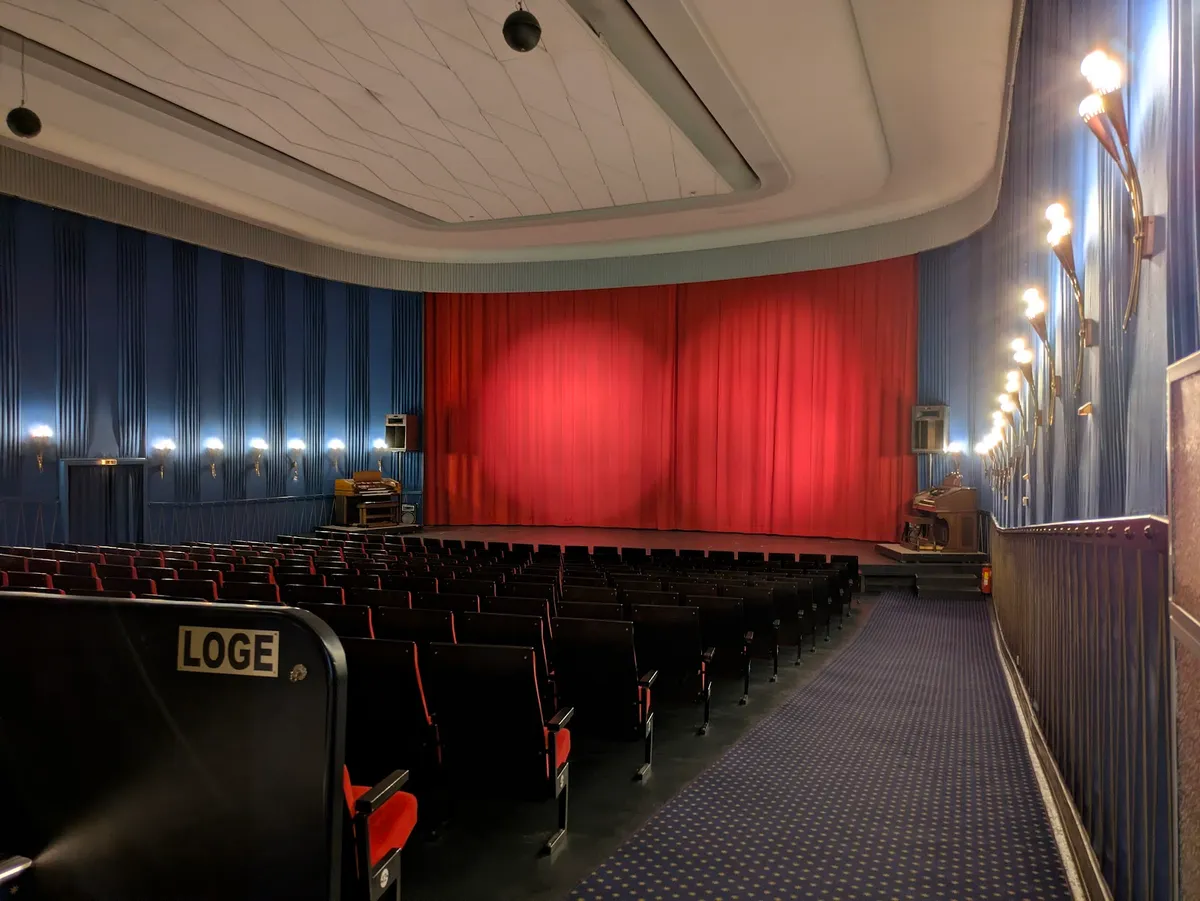
- Essen Eulenspiegel
Opened in 1955 and one of three original 1950s cinemas its operator has kept, restored in the style they were built in rather than modernised out of it. 288 seats. The reason it is worth naming is that it is ordinary: a district cinema of the rebuilding years, the kind almost every German town had and almost none still has in its own room.
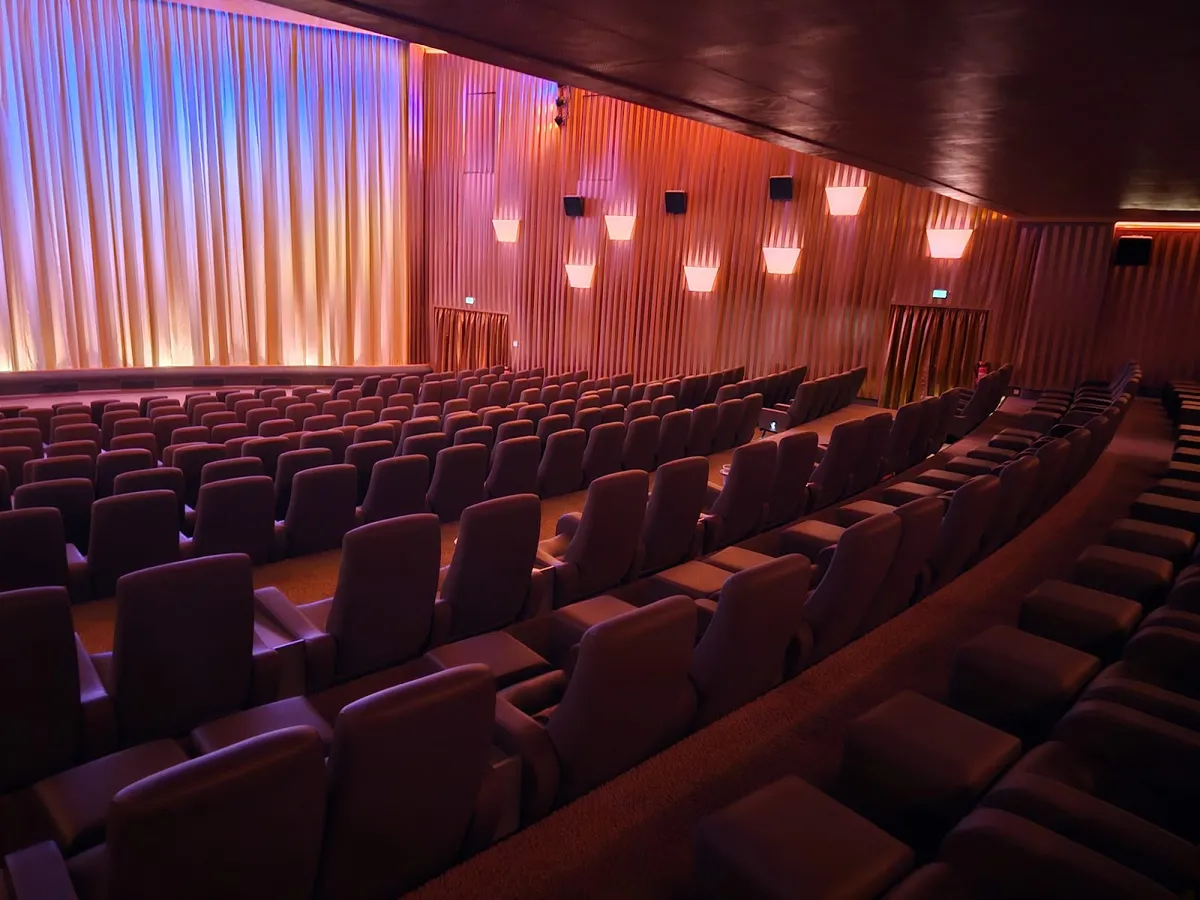
- München Gloria Palast
Opened on 28 August 1956, built by the film producer Ilse Kubaschewski, and Munich's leading premiere house for decades. The 800-seat original was known for illuminated water fountains that rose in columns in front of the curtain to organ music. What survives is one hall of 242 seats on Karlsplatz, now with a Barco RGB laser projector, which is a strange and rather good combination.

- Hamburg SAVOY Filmtheater
Opened in 1957 with Todd-AO and advertised as the most modern cinema in Europe, which for a few years it was. One hall, a screen of 16.8 by 7.1 metres, heavy stage curtains. A 70 mm projector went back in in 2015, so the room can still do the thing it was built to do.
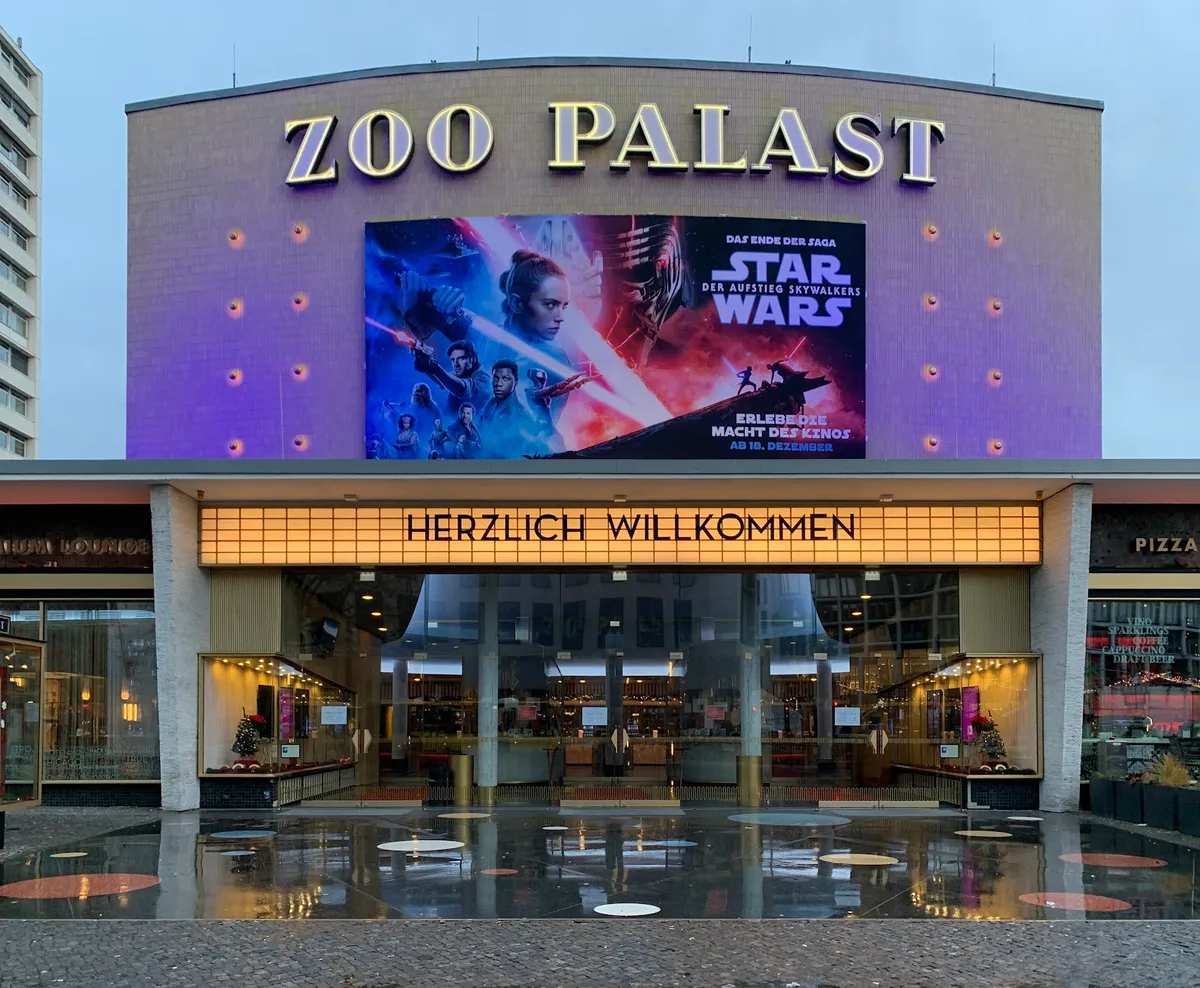
- Berlin Zoo Palast
There has been a picture house at this address since 1915; the building you walk into was inaugurated in 1957 and is listed. It was the Berlinale's competition venue until 1999, went dark at the end of 2011, and came back on 27 November 2013 after a restoration of more than two years. Kino 1 seats close to 800 behind 21 by 9 metres of screen, with 93 loudspeakers across 44 Atmos channels and a 70 mm projector that still gets threaded.
- Berlin Kino International
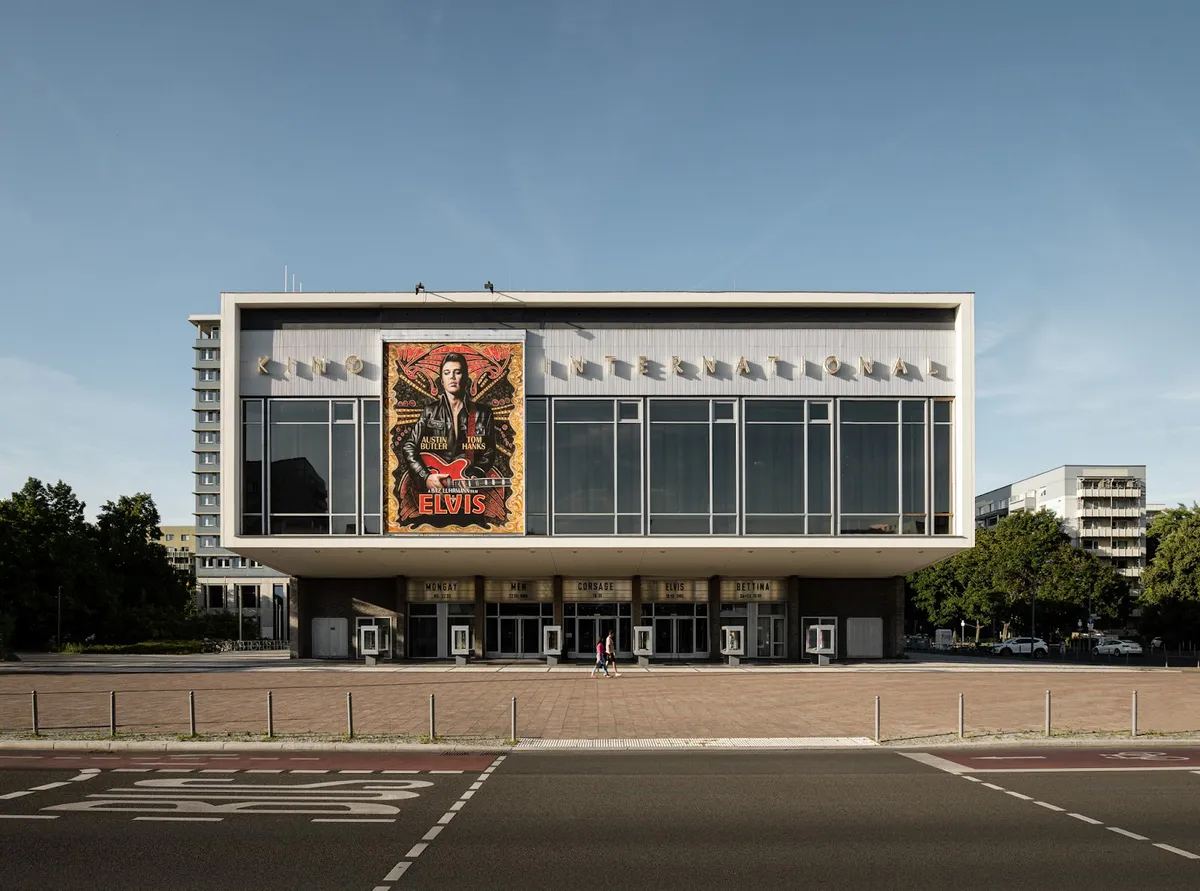
Opened on 15 November 1963 to designs by Josef Kaiser and Heinz Aust, the DEFA's premiere cinema and the best surviving room of East Berlin's post-war modernism. Coming Out premiered here on 9 November 1989, the night the Wall opened. Under monument protection since 1990 and with the Yorck group since 1992. The restoration left it at 506 seats with wider rows, a 19 by 8 metre screen and a Christie 4K laser, and put the silver premiere curtain and its twenty million sequins back to their original shimmer.
Almost none of this costs extra
A grand room and a premium ticket are separate purchases, and they are easy to confuse because both get described as luxury. Fourteen of the eighteen houses here sell a standard ticket in their city: you pay the same at the Kino International as at any other Yorck cinema, and the same at the Babylon as at any Berlin arthouse. The other four happen to be premium cinemas as well, which is a fact about their service rather than about their architecture.
The premium cinemas, and what they chargeGood to know
- What makes a cinema a landmark here?
- Three things, all checkable. We carry its programme, so the entry links to real showtimes. It still shows films in the historic room, rather than behind a preserved façade. And the operator's own pages carry the history, so the year, the architect and the listing come from the house rather than from a summary of it.
- Which is Germany's oldest cinema?
- It depends what you count, and the Rex in Wuppertal makes the problem clear: it dates its first screening to 1889, which would make it the oldest anywhere, except the building was a hotel at the time. Several German cinemas have a claim of this kind and each rests on a different definition, so this page orders by first screening and lets the dates speak.
- Do landmark cinemas cost more?
- Usually not. Most of these charge their city's ordinary ticket price. four of the eighteen are also premium cinemas with service at the seat, and that is what raises the price there, not the room.
- Which cinema still has its original organ?
- The Babylon in Berlin. Its Philipps cinema orchestra organ is the only one in Germany still standing where it was installed in 1929, and it is played at silent film screenings rather than kept as an exhibit.
- Which cinemas are missing?
- Ones whose operator publishes nothing a reader can check, which is a different list from ones that would not qualify. Four were chased and answered. The Weltspiegel in Mettmann claims to be the oldest cinema in Germany in continuous use and has no findable website, which is the one that stings. The Schauburg in Dortmund has none either. The Capitol in Schwerin has the substance and no date: its Kino 1 was renovated with the monument protection office and holds 487 across stalls, balcony and boxes, but the site never says when it opened, and a page ordered by year cannot place it. The Lichtburg in Oberhausen has lost its domain to a crypto-spam site.
Every entry was read off the operator's own pages on 7 August 2026. Years, architects and seat counts are theirs.